Key findings
- Update, 17 November 2026: the bitcoin has not moved, the XRP has. All 18,270.2 BTC and 214,720 ETH in the addresses we track are untouched (verified). The 233.46 million XRP left the attacker's account on 2 November in about thirteen minutes, was regrouped in one account and by 12 November had been paid out to about 100 accounts (verified). The FBI attributed the theft to North Korea on 31 October. Binance's report of 3 November traces the break-in to a fake job interview in September. Binance reopened withdrawals in phases from 1 November and said on 12 November that every loss was covered. Findings 2 to 8 are as published on 30 October.
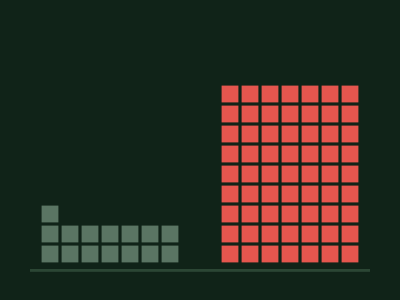
- It is the largest crypto theft on record by a wide margin. Binance puts the impact at about $6.3 billion; an independent per-chain tally reaches $6.28 billion at the prices of the moment. Bybit's $1.46 billion (2025) was the previous record. The loss is roughly 4% of the about $144 billion Binance held before the attack.
- The signer obeyed; the keys stayed home. Binance says a compromised DevOps engineer's laptop led to a service container from which unauthorized withdrawals were submitted, and that it found no private-key leak. The chain agrees: on seven chains the money left in ordinary transactions signed by Binance's own keys, and on Ethereum the Binance 14 key signed fifty EIP-7702 authorizations for an attacker contract. Whoever controls what a signing service is asked to sign does not need the key.
- EIP-7702 turned a theft into an occupation. One of the fifty authorizations matched the wallet's nonce at 20:20:59 UTC (verified). Binance 14 then ran the attacker's sweeper for 3 h 49 min and was called twelve times. Besides the first sweep (167,464 ETH, 1.615 billion USDT and 62 other tokens), it pulled 823 million USDC from a smart wallet that trusted Binance 14, and an inbound 2,961.9 ETH three and a half hours after the first sweep.
- The timeline starts earlier than the headlines say. Most coverage dates the attack to the Ethereum sweep at 20:24 UTC. We verified a failed 42.75 million RLUSD payment on the XRP Ledger at 20:04:52 and a successful 185.0 million XRP theft at 20:05:00. Solana, Optimism, Bitcoin and TRON outflows all landed before the Ethereum sweep. Binance's first acknowledgement on X came at 21:17 UTC; its official account announced the withdrawal suspension at 22:33.
- The freeze was the fastest and largest ever, because of what was stolen. About 57% of the haul was in assets an issuer can freeze. World Liberty Financial acted at 20:57:47, Tether at 21:01:35 and Circle at 21:04:59 (the last two verified). About $3 billion is frozen, including 1.38 billion USDT and 824.6 million USDC that we read on Ethereum. Tether even blacklisted Binance 14 itself at 22:06:23.
- The unfreezable half has not moved. At our snapshot the seventeen 1,000-BTC outputs were all unspent, the 233,461,943 XRP account had never sent a transaction, and 197,460 ETH sat idle in an address with a nonce of zero. The attacker was busy dumping some sixty smaller tokens into ETH through roughly 490 Uniswap transactions instead.
- Binance can absorb it; the industry should not shrug. The 15,000-BTC SAFU fund (about $1.16 billion at the snapshot) covers about a third of the unrecovered $3.3 billion; Binance says company funds cover the rest. Deposits and withdrawals are suspended with no reopening date. North Korea is the suspect named by Blockaid and ZachXBT; no government has attributed the attack. Superseded in v1.1: deposits were never suspended, withdrawals reopened from 1 November, and the FBI attributed the attack on 31 October.
Contents
- Update, 17 November 2026: the bitcoin has not moved, the XRP has, and the FBI names North Korea
- 1. Background: the exchange, its safety net, and the year it happened in
- 2. Anatomy of the theft: the evening of 29 October, on-chain
- 3. The mechanism: a laptop, a container, an obedient signer
- 4. The freeze: the largest in crypto history, and why
- 5. Where the money is now
- 6. The response: statements, suspension, solvency
- 7. Attribution: North Korea is the suspect, not yet the finding
- 8. Discussion: what this incident settles
- 9. Limitations and open questions
- Frequently asked questions
- Methodology and data sources
- References
- Revision history
- How to cite this report
Abstract. On the evening of 29 October 2026 (UTC) Binance, the largest cryptocurrency exchange, lost what it estimates at about $6.3 billion from hot wallets on eight blockchains: Ethereum, Bitcoin, TRON, the XRP Ledger, Solana, Arbitrum, Avalanche and Optimism. It is the largest theft in the industry's history, more than four times Bybit's $1.46 billion in February 2025 and larger than everything Chainalysis counted as stolen across the whole of 2025. Binance's preliminary finding is that the attacker compromised a DevOps engineer's laptop, used it to reach a service container and "submit unauthorized withdrawal transactions", and that no wallet private key leaked. The chains are consistent with that account and add detail the statement leaves out. We verified directly that the first theft we can time to the second happened on the XRP Ledger at 20:04:52 UTC; that 18,270.2 BTC left in eleven transactions confirmed at 20:20 UTC and was immediately cut into seventeen 1,000-BTC pieces; and that at 20:20:59 UTC a single transaction carried fifty EIP-7702 authorizations, every one validly signed by the key of the Binance 14 hot wallet, which turned that wallet into a sweeper running the attacker's code until Binance revoked it at 00:10:35 UTC, three hours and forty-nine minutes later. In that window the sweeper took 172,624 ETH, 1.82 billion USDT and 823 million USDC pulled from a smart wallet that trusted Binance 14. Token issuers reacted within 33–37 minutes; about $3 billion is frozen, roughly 48% of the loss, against 0.08% at Bitget a month earlier. The rest (above all 18,270 BTC, 233.5 million XRP and about 213,000 ETH) is in assets nobody can freeze and, at our snapshot, had not moved. Binance says it will cover every loss from its 15,000-BTC SAFU fund and company funds and has suspended deposits and withdrawals. North Korea is the suspect most investigators name; no government has said so. All figures in sections 1 to 9 are frozen as of 30 October 2026, about 03:30 UTC, roughly seven hours after the theft; what changed by 17 November 2026 is in the update directly below.
Update, 17 November 2026: the bitcoin has not moved, the XRP has, and the FBI names North Korea
Version 1.0 was written seven hours after the theft and listed the events that would trigger a revision. Nineteen days on, this section answers each of them. Sections 1 to 9 are left as published, apart from the few edits listed in the revision history. Everything marked verified below we read from the chains ourselves on 17 November 2026 between 11:10 and 12:15 UTC; Binance's announcements were read the same morning. Balances will have moved since.
The bitcoin has not moved (verified). All seventeen 1,000-BTC outputs are unspent, and the 1,270.2 BTC remainder sits in two unspent outputs of 437.7 and 832.5 BTC. That is the full 18,270.2 BTC, untouched since the night of the theft. At $64,195 it is worth about $1.17 billion, down from $1.41 billion at our first snapshot only because the price of bitcoin fell.
The ether we track has not moved either (verified). The address
0x8532…43D4 still holds 197,460 ETH and has still never sent a transaction. The main
receiving address is now empty of ether: at 05:15:47 UTC on 30 October, under two hours after our
snapshot, it sent 17,260 ETH to 0x03b0eE5d82990cFF1bDa48651AC3e436d1a020ea, which has held it ever
since without sending anything. Together that is 214,720 ETH, about $385 million, sitting in two
addresses. It is not all of the attacker's ether. The FBI says the group is converting stolen assets mainly into
ether, and Elliptic describes automated swapping and bridging around the clock; we follow only these two
addresses.
The XRP has moved, twice (verified). Version 1.0 said the attacker's XRP account had never sent
a transaction. On 2 November it sent a single 1,000-XRP payment at 02:12:40 UTC and then, between 03:47:11
and 04:00:31 UTC, fifteen more. In a little over thirteen minutes 233,460,920 XRP went to six new
accounts, five receiving 40,001,000 XRP each and one 33,455,920, each after a 1,000-XRP test payment. The
original account now holds 23.7 XRP. Between 6 and 11 November five of the six sent their whole balance,
in one payment each, to the sixth, ryB7NESZcttqzRioiD5L6Kf5tFL87ktmx. That account began paying out on
5 November at 14:56 UTC and by 12 November had sent more than 233 million XRP onward in about
1,300 payments to about 100 accounts. It now holds 4.5 XRP. None of those payments carries a destination
tag, the field most exchanges require on deposits. We looked at the five largest recipients: each repeats the
pattern, with hundreds of payments to between seven and ten further accounts, several of them shared. We stopped
there. The ledger shows where the XRP went, not who controls these accounts, and we have not found where it
leaves this web of accounts.
The largest block of frozen stablecoins is still in place (verified). The main receiving address still holds 1,175.46 million USDT and 823.00 million USDC, the balances we read on 30 October, and both issuers still list it as blacklisted. On 12 November the US Justice Department said it had obtained court authorization to seize or restrain more than $1.2 billion of the stolen assets, part of about $2.7 billion frozen by several platforms (The Record). On Ethereum that has not yet shown up as a movement or a burn at this address. The total has come down: Binance's first announcements said about $3 billion was frozen; its 3 November report says about $2.85 billion was frozen or intercepted (BleepingComputer), the figure Elliptic also verified. That is 44% to 45% of the loss, not the 48% we gave. One detail we did not expect: the Binance 14 hot wallet is itself blacklisted by both Tether and Circle. It carries no delegation code and has not sent a transaction since 08:44:11 UTC on 30 October, so Binance appears to have retired it.
Binance's post-mortem, 3 November. Binance published its findings on its blog on 3 November. We could not read the original, which automated tools cannot load, so this summary rests on BleepingComputer's and Rekt's accounts of it, which agree. In September an engineer was approached through a legitimate job site by a fake recruiter and, in a second interview, told to download a coding assignment that carried malware. By 20 October the attackers had used that engineer's computer and an internal AI tool to reach two more employees who worked on wallet infrastructure, and had obtained credentials and a token that allowed containers to be deployed. On 29 October they used those to deploy a malicious script and gain unauthorized access to the wallet signing service, which they used to start the transfers and set up the EIP-7702 delegations. That is a longer route than the single "DevOps laptop" of Binance's first statement, but it ends where section 3 argued it must: at a signing service that obeyed the attacker. Binance's first announcement said it had found no evidence of a private key leak, and nothing in these accounts changes that. Rekt notes that the report does not say who or what held the signing shares. Binance says it has rebuilt the affected systems, replaced the devices and revoked the credentials, and that independent firms are reviewing its findings.
What Binance has announced since. Its second announcement, on 30 October at 19:33 UTC, put the compromise of its hot wallets at "around 2026-10-29 20:05 (UTC)", which matches the 20:04:52 we read on the XRP Ledger, and said more than $6.34 billion of company funds had been set aside. Withdrawals resumed in phases from 1 November, starting between 06:00 and 09:00 UTC, with more assets announced on 3, 5 and 6 November. Binance reported 90% of the stolen assets replenished on 31 October, about 95% by 2 November and about 98% on 4 November. On 12 November it said coverage was complete, paid for by "a partial deployment" of SAFU, part of its Futures insurance fund and its own treasury, with a commitment to refill SAFU to about $1 billion. It published proof-of-reserves snapshots for 31 October, 4 November (44 tokens) and 12 November (198 tokens). On 14 November it said withdrawals had reopened for 87 networks that week and that it aimed to reopen all the rest by the end of the following week. These are Binance's statements; we have not verified the reserve figures or the size of the SAFU drawdown.
A correction. Version 1.0 said deposits and withdrawals were both suspended, following an executive's post on the night. Binance's first announcement was amended on 30 October to say that deposits were unaffected. Only withdrawals were suspended.
Figures that differ. Binance's announcements say "approximately $6.3B". BleepingComputer's account of its 3 November report gives about $6.34 billion. Elliptic's count, last updated on 1 November, is $6.43 billion, and it lists eleven networks: the eight in this report plus NEAR, Base and Polygon, the last in a second wave after 23:00 UTC. Version 1.0 worked from the per-chain analysis available on the night and says eight chains throughout; read that as at least eight. We have not checked the three additional networks ourselves and have not reconciled the dollar totals.
Attribution is no longer open. On 31 October the FBI published an alert stating that North Korea "was responsible for the theft of more than $6 billion USD in virtual assets from cryptocurrency exchange Binance, on or about October 29, 2026" (quoted by BleepingComputer; the FBI's own page does not allow automated reading). It names the group it tracks as TraderTraitor, the same one it named for Bybit. TRM Labs and Chainalysis had already linked the theft to that group. Section 7 said we would not treat attribution as established until a government said more; one now has. North Korea denied involvement on 3 November (reported by BBC News; we have that second-hand).
| What | 30 Oct 2026, 03:30 UTC (v1.0) | 17 Nov 2026, 11:10–12:15 UTC (v1.1) |
|---|---|---|
| 18,270.2 BTC | Unspent (~$1.41 B) | Unspent, all 19 outputs (~$1.17 B) |
| 197,460 ETH at 0x8532…43D4 | Never sent a transaction | Never sent a transaction |
| Ether at the main receiver | ~15,700 ETH, still trading | 0 ETH; 17,260 ETH sent on 30 Oct 05:15:47, unmoved since |
| 233.46 M XRP | Never sent a transaction | Sent to six accounts on 2 Nov, regrouped in one, paid out to about 100 accounts by 12 Nov |
| Frozen USDT and USDC at the main receiver | 1,175.46 M USDT; 823.00 M USDC | Same balances, still blacklisted |
| Frozen in total | ~$3 B (Binance), 48% of the loss | ~$2.85 B (Binance's report, Elliptic), 44–45% |
| Binance withdrawals | Suspended, no date | Reopened in phases from 1 Nov; not yet every network on 14 Nov |
| User losses | Binance promises to cover them | Binance says coverage is complete (12 Nov) |
| Attribution | No government statement | FBI names North Korea (31 Oct) |
| Post-mortem | Promised | Published 3 Nov: fake job interview, internal AI tool, signing service |
The revision triggers, answered
- Binance's post-mortem. Published on 3 November. We read it second-hand; the summary is above.
- Reopening of deposits and withdrawals. Withdrawals reopened in phases from 1 November and were not yet open on every network on 14 November. Deposits were never suspended (corrected above).
- The 1 November proof-of-reserves snapshot. Binance published snapshots dated 31 October, 4 November and 12 November instead. We did not run its verifier.
- Any government attribution. The FBI, on 31 October.
- Movement of the 18,270 BTC, the 233.5 million XRP or the 197,460 ETH. The bitcoin and that ether: no. The XRP: yes, all of it, from 2 November.
- Final freeze and recovery totals. Not final. Binance's report gives about $2.85 billion frozen or intercepted; the Justice Department cites about $2.7 billion frozen and more than $1.2 billion under court authorization.
- Any SAFU drawdown or top-up. Binance says part of SAFU was used and that the fund will be refilled to about $1 billion. It gave no amount, and we did not verify it on-chain.
Not re-checked in this version: balances on TRON, Solana, Avalanche and Optimism, which version 1.0 took from Dickson Wu's analysis; the two other Ethereum addresses that held 205 million frozen USDT on 30 October; the losses on NEAR, Base and Polygon; the attacker's ether outside the two addresses above; and where the XRP leaves the web of accounts described above.
1. Background: the exchange, its safety net, and the year it happened in
Binance was founded in 2017 and became the world's largest exchange by volume within a year. Its founder, Changpeng Zhao (CZ), stepped down as chief executive in November 2023 as part of a settlement with US authorities and remains its largest shareholder; the company is run by chief executive Richard Teng and co-chief executive Yi He, a co-founder. It had been hacked once before, on 7 May 2019, when attackers using phished API keys and two-factor codes withdrew 7,000 BTC (about $40 million then) from a hot wallet. That loss was covered by the Secure Asset Fund for Users (SAFU), created in July 2018 and funded from trading fees. SAFU has since been kept at about $1 billion. On 30 January 2026 Binance said it would convert the fund's stablecoins into bitcoin, and on 12 February it reported holding 15,000 BTC, bought at an average of about $67,000, with a promise to top the fund back up to $1 billion if its value fell below $800 million.
Before the attack Binance held roughly $144 billion in customer and corporate assets (DefiLlama, as
reported by CoinDesk) and published monthly proof-of-reserves snapshots. The 1 October 2026 report showed
the Binance 14 Ethereum hot wallet holding 1.26 billion USDT and 89,475 ETH among 37 assets, and an ETH
reserve ratio of exactly 100%. Like every large exchange, Binance keeps most assets in cold storage and a working
float in hot wallets that are signed automatically by internal services so that withdrawals can be processed in
seconds. Binance 14 (0x28C6…1d60) is one of the oldest and busiest of those wallets: it had
sent almost 18.9 million transactions before the attack.
The industry context explains why the attack looked the way it did. Large thefts since 2022 have moved away from smart-contract bugs and toward the machinery around keys. Ronin (2022) lost $625 million when five of nine validator keys were taken after a fake job offer; DMM Bitcoin (2024, $305 million) and WazirX (2024, $235 million) were drained through compromises of their wallet infrastructure; Bybit (21 February 2025, about $1.46 billion) lost about 400,000 ETH plus staked ether after a Safe{Wallet} developer's machine was compromised and its signers approved a disguised contract upgrade, attributed by the FBI within a week to North Korea's TraderTraitor unit. LastPass's 2022 breach, outside crypto, escalated through a DevOps engineer's home computer. In 2026 the pattern continued: Drift ($285 million, April), Kelp DAO ($292 million, April) and, on 24 September, Bitget, which lost $387.5 million when forged withdrawal commands reached its signing backend through a third-party zero-day (our Bitget report). Binance's loss is sixteen times Bitget's.
One more piece of background is technical. On 7 May 2025 Ethereum's Pectra upgrade activated EIP-7702, which lets an ordinary externally owned account (EOA), the kind of account every exchange hot wallet is, point to a smart contract and run its code as if it were its own. The owner authorizes this by signing a short message containing a chain ID, the contract address and the account's current nonce; anyone can then submit that authorization on-chain. Within weeks Wintermute reported that most 7702 delegations were going to copies of a single malicious "sweeper" contract it nicknamed CrimeEnjoyor, used by thieves holding leaked keys to drain anything that arrived. Until 29 October, nobody had used the mechanism against an exchange.
2. Anatomy of the theft: the evening of 29 October, on-chain
The attack had been prepared for at least a day and a half, and every step of the preparation is public. The
Ethereum address that would later operate the theft, 0x7c86…5ca0, received its first gas money
from the Tornado Cash 0.1 ETH pool at 07:39:47 UTC on 28 October, with further withdrawals at 08:53:59
that morning and at 08:23:11 on the 29th (about 0.098 ETH each after fees; verified). At 02:28 UTC on the
29th it deployed a first contract. At 13:51 it attached EIP-7702 delegations to two test wallets of its own and at
14:19 and 14:24 called them with the same sweep function (selector 0x8a179be4) it would later use
against Binance. At 15:59:11 it deployed the contract used in the attack, 0x63e8…6fAe, verified
on Blockscout under the name Target, and rehearsed once more on a third wallet between 16:20 and 16:47. At
18:20:47 it received another 1.08 ETH from a second wallet that Dickson Wu traces to Tornado Cash. Blockaid's
chief executive, Ido Ben-Natan, summed it up: "The attack was planned well in advance, with the attacker funding the
operation through Tornado Cash and rehearsing the same takeover on test wallets hours before, all of it visible
on-chain."
The first theft that can be timed to the second happened not on Ethereum but on the XRP Ledger. At
20:04:52 UTC (ledger 107,986,692) the Binance account rDAE53…JPxr tried to send 42,750,000.1 RLUSD to rK21t6…fzMx.
It failed with tecNO_DST: the destination did not exist yet. Eight seconds later, at 20:05:00, the same
account sent 185,017,485.5 XRP, which created the account. Four more accounts, which Dickson Wu identifies as Binance wallets, followed by 20:09:20,
for 233,461,943.1 XRP in all (verified). The failed RLUSD payment is the clearest fingerprint of automation in
the whole incident: whatever was issuing withdrawals did not check that the receiving account had been funded.
Dickson Wu's reconstruction, the most detailed published, puts 965,455 SOL leaving on Solana at 20:10 and
44.2 million OP on Optimism at 20:18. On Bitcoin we verified eleven transactions from Binance's high-volume wallet
bc1qm34l…j77s3h (2.37 million transactions to date) sending 18,270.2 BTC to
bc1q0mtc…2mnm, all confirmed in block 973,732 with a timestamp of 20:20:06 UTC. In the same
block, seventeen further transactions peeled that sum into seventeen outputs of exactly 1,000 BTC, each at a
fresh address. Because the previous block is stamped 19:55:32, the Bitcoin withdrawals were broadcast somewhere in
that 25-minute window. On TRON, 612.7 million USDT and 46.4 million TRX left between 20:20 and 20:22
(Dickson).
On Ethereum, the attack used the second mode. At 20:20:59 UTC (block 26,300,753) the operator submitted one type-4 transaction to Binance 14 carrying fifty EIP-7702 authorizations. We read every one of them: all fifty recover to the Binance 14 address as signer, all name chain ID 1 and the attack contract, and they cover fifty consecutive nonces, 18,914,775 to 18,914,824. Forty-nine were rejected for the wrong nonce. The one for 18,914,809 was valid, because Binance's own withdrawal service had just used 18,914,808 in the same block. From that moment one of the busiest hot wallets on Ethereum executed the attacker's code whenever anyone called it.
Three minutes and twenty-four seconds later the operator called it. The transaction at 20:24:23
(0x53bd…2f3) moved 167,464.25 ETH and 63 ERC-20 balances to 0x5227…2f8c:
among them 1,615,409,498.97 USDT, 62.6 million RLUSD, 29,934 wBETH, 27.76 million USD1,
11,372 XAUt, 1,898 PAXG, 82.5 WBTC, 198 million ENA, 6.19 million UNI and 7.18 trillion PEPE.
Twenty-four seconds after that, at 20:24:47, the Binance 16 wallet (0xDFd5…963d) sent
28,005.6 ETH directly to the same address in a plain 21,000-gas transfer: no contract involved, just a
transaction signed with Binance's own key. Dickson counts nine such direct transfers from Binance 16, worth
$174 million.
| Chain | Taken | Value at theft | Status at snapshot | We verified |
|---|---|---|---|---|
| Ethereum | 200,630 ETH; ~1.88 B USDT; 823 M USDC; 88.5 M RLUSD; 29,934 wBETH; ~60 other tokens | ~$3.74 B | 1.38 B USDT and 824.6 M USDC frozen; 197,460 ETH idle at 0x8532… | Yes |
| Bitcoin | 18,270.2 BTC | ~$1.47 B | 17 × 1,000 BTC unspent | Yes |
| TRON | 612.7 M USDT + 46.4 M TRX | ~$627 M | 378.7 M USDT frozen; ~234 M swapped to TRX first | No |
| XRP Ledger | 233,461,943 XRP (42.75 M RLUSD failed) | ~$297 M | Untouched; account never transacted | Yes |
| Solana | 970,522 SOL | ~$96 M | Untouched | No |
| Arbitrum | 8,426 ETH + 74.6 M ARB | ~$32 M | ~$30.5 M reported frozen; address now 0.48 ETH, 0 ARB | Partly |
| Avalanche | 1.81 M AVAX + 8.41 M USDT | ~$24 M | USDT frozen; AVAX moved | No |
| Optimism | 44.2 M OP | ~$5 M | Untouched | No |
| Total | ~$6.28–6.3 B | ~$3 B frozen (Binance) |
3. The mechanism: a laptop, a container, an obedient signer
Binance's account, published in the early hours of 30 October, is brief: "Binance's initial investigation suggests that the security incident may involve a compromised DevOps engineer's laptop, which allowed an attacker to gain access to a service container and submit unauthorized withdrawal transactions. We have found no evidence of any wallet private key leak." It is hedged ("suggests", "may involve") and it is preliminary, but it is specific, and the chains fit it.
A modern exchange does not keep hot-wallet keys on the machines that decide what to withdraw. Keys live in hardware security modules or are split across MPC nodes; a withdrawal service assembles a transaction and asks a signing service to sign it; a policy layer is meant to check that the request is legitimate. The weak point is the request path. Anyone who can speak to the signing service with the credentials of a legitimate internal service gets signatures without ever touching a key. A DevOps engineer is exactly the person whose laptop holds those credentials: deployment keys, cluster access, the ability to open a shell inside a running container. Cobo co-founder Shen Yu, reviewing the transactions, reached the same place from the other side: "From the chain perspective, the issue lies in the signing process; no contract vulnerabilities were observed."
The chain shows two kinds of output from that compromised path. The first is plain withdrawals: on the XRP
Ledger, Bitcoin, TRON, Solana, Optimism and from Binance 16 on Ethereum, Binance's wallets sent funds to new
addresses in ordinary, correctly signed transactions. That is what "submit unauthorized withdrawal transactions"
means. The second is stranger, and is the novel part of this attack. Binance 14's key signed fifty EIP-7702
authorizations, not transactions, but 7702 permission messages (a hash of 0x05 followed by the
chain ID, the contract address and a nonce). A signing service that accepts that payload from a withdrawal
container has no policy that distinguishes "pay this address" from "hand this account to a contract".
Why fifty signatures? A reading of the nonce spread
An EIP-7702 authorization is only valid if its nonce equals the account's nonce at the moment the transaction is executed. Binance 14 was processing customer withdrawals continuously: it used nonce 18,914,775 at 20:17:47 UTC and 18,914,808 at 20:20:59, thirty-four transactions in three minutes. Someone holding the private key would have signed one authorization with the right nonce at submission time. The attacker instead brought a batch covering the next fifty nonces, starting exactly at the one Binance 14 was using at 20:17:47, and submitted it when the wallet had moved thirty-four places along. Our reading, which is an inference rather than an established fact, is that the attacker could obtain signatures but could not sign on demand: they asked the signing service for a block of authorizations about three minutes before using them and over-provisioned the nonce range to survive the wallet's traffic. That is consistent with Binance's statement that no key leaked, and with a signing oracle rather than a stolen secret.
Why EIP-7702? Persistence
Direct withdrawals take what is in a wallet at one moment. A 7702 delegation keeps working. Ben-Natan's
description is exact: "The attacker effectively reprogrammed a major Binance Ethereum hot wallet so that a single
operator could drain it, including any new money deposited into it, and they used that access again more than an
hour later." We counted twelve calls to the sweeper between 20:24:23 and 23:56:47. Two of them pulled 780 million
and 43 million USDC out of 0xEe7a…4055, an upgradeable smart wallet that obeys
Binance 14, and therefore, for those hours, obeyed the attacker. Others took deposits as they landed,
including 2,961.9 ETH at 23:56:47, three and a half hours after the first sweep, which Shen Yu described as a
deposit stuck on low gas. Binance's own withdrawal service, meanwhile, kept sending from the same wallet: Binance 14
originated 31 transactions of its own between 20:24 and 22:00.
Undoing a delegation requires a new authorization signed by the same key, which means the containment of the signing path and the revocation were the same problem. Binance cleared Binance 14's remaining balances between about 22:55 and 23:07 (Dickson) and revoked the delegation at 00:10:35 UTC with a self-sent type-4 transaction pointing the account at the zero address (verified; the wallet's code is now empty). The delegation lived for three hours, forty-nine minutes and thirty-six seconds.
| Sweeper call (UTC) | ETH taken | Main tokens taken |
|---|---|---|
| 20:24:23 | 167,464.25 | 1,615.4 M USDT; 62.6 M RLUSD; 27.8 M USD1; 29,934 wBETH; 59 others |
| 20:41:23 | — | 780.0 M USDC (from smart wallet 0xEe7a…) |
| 20:59:47 | — | 43.0 M USDC (same smart wallet) |
| 21:04:23 | 1,699.92 | 3.9 M USDT and 22 other tokens |
| 21:44:11 | 369.83 | 200.4 M USDT and 13 other tokens |
| 22:39:35 | 128.49 | 122 small balances |
| 23:36:47 – 23:54:59 | — | five calls, nothing left to take |
| 23:56:47 | 2,961.91 | — |
| Total | 172,624.40 | 1,819.7 M USDT; 823.0 M USDC |
4. The freeze: the largest in crypto history, and why
At Bitget a month earlier, the freeze apparatus of the whole industry recovered 0.08% of the loss. At Binance it recovered something like half. The difference is not that issuers became faster (though they were fast ) but what the attacker took. Using Dickson Wu's per-asset values, about 57% of the haul was in tokens whose issuer can blacklist an address: USDT on three chains, USDC, Ripple's RLUSD, World Liberty's USD1 and WLFI, Tether Gold, Paxos Gold, and Binance's own wBETH. The remaining 43% (bitcoin, ether, XRP, SOL, TRX, AVAX, OP and dozens of small tokens) has no issuer to call. Our estimate is that roughly four-fifths of the freezable part is now frozen.
Speed mattered at the margin. The attacker started splitting USDT into new addresses within six minutes of the first sweep (500 million USDT to one address at 20:30, 200 million to another at 20:33, according to Dickson), and swapped about 234 million USDT into TRX on TRON before Tether reached it there. But the main receiving address was blacklisted with most of its stablecoins still inside: World Liberty Financial acted at 20:57:47, Tether at 21:01:35 and Circle at 21:04:59. Later sweeps kept delivering USDT into the already-frozen address, which now holds 1,175,464,712.78 USDT and exactly 823,000,000 USDC (verified). On Ethereum alone we read sixteen USDT and USDC blacklisting events between 21:01:35 and 01:19:47, most of them at addresses that received funds from the attacker.
| Actor | Asset | Amount frozen | First action (UTC) | Source |
|---|---|---|---|---|
| Tether | USDT on Ethereum | 1,380.46 M at three attacker addresses | 21:01:35 | Verified |
| Tether | USDT on TRON | 378.7 M | 21:09–21:21 | Dickson |
| Tether | USDT on Avalanche | 8.41 M | 21:07:55 | Dickson |
| Tether | XAUt (gold) | 12,574 (~$50 M) | 21:11:23 | Dickson |
| Circle | USDC | 823.0 M + 1.56 M (bridged via CCTP) | 21:04:59 | Verified |
| World Liberty Financial | WLFI / USD1 | 48.5 M WLFI; 27.8 M USD1 | 20:57:47 / 22:10:35 | Dickson |
| Ripple | RLUSD | 40.5 M | 22:00:59 | Dickson |
| Paxos | PAXG (gold) | 1,907 | 22:30:47 | Dickson |
| Binance | wBETH | 29,934 (~$77 M) | 22:48:35 | Dickson |
| Arbitrum Security Council | ETH, ARB | ~$30.5 M | evening of 29 Oct | Bitcoin.com |
| Total | ~$2.8 B at 23:50; ~$3 B per Binance |
Two of these actions deserve a second look, because they show how much discretionary power now sits in a few hands. At 22:06:23 UTC Tether blacklisted Binance 14 itself (an exchange hot wallet ) because for that evening it was effectively an attacker-controlled contract; Circle did the same at 23:53:35, and also blacklisted the smart wallet the USDC had come from. And Bitcoin.com reports that Arbitrum's Security Council executed an on-chain action that froze about $30.5 million of the attacker's funds on Arbitrum; the attacker's 7702-delegated Arbitrum address now holds 0.48 ETH and no ARB (verified). Both were almost certainly right on the night. Both are also reminders that "frozen" means a company or a council decided so, and that the same levers can be pulled for worse reasons.
A note on Aave. Using some of the stolen USDT as collateral, the attacker borrowed ETH from Aave, at least 20,000 WETH (about $44 million) according to analyst MonetSupply at 21:19 UTC, against about 60 million USDT deposited from one of the split addresses according to Dickson. Aave froze "all DAO-operated markets across V3 and V4" as a precaution at 22:46, leaving withdrawals and repayments open; it says its contracts were unaffected. The collateral is effectively trapped (any USDT withdrawn would land in an address Tether has already blacklisted) but the borrowed ETH is not.
5. Where the money is now
By the time of our snapshot, about seven hours after the theft, the attacker had moved almost none of the unfreezable assets. That is the opposite of Bitget, where the stablecoins were swapped into ETH within ninety minutes and the XRP was on its way to Bitcoin within two days, and of Bybit, whose roughly 500,000 ETH-equivalent was laundered, largely through THORChain, in about ten days.
| Holding | Where | Amount | Value at snapshot | Moved? |
|---|---|---|---|---|
| BTC | 17 addresses of exactly 1,000 BTC + a 1,270 BTC remainder | 18,270.2 BTC | ~$1.41 B | 1,000-BTC pieces unspent (verified); 437.7 BTC of the remainder moved at 20:48 |
| ETH | 0x8532…43D4 | 197,460.0 ETH | ~$437 M | Never sent a transaction (verified) |
| ETH | 0x5227…2f8c (main receiver) | ~15,700 ETH | ~$35 M | Active: ~490 Uniswap trades |
| XRP | rK21t6…fzMx | 233,461,943 XRP | ~$287 M | Never sent a transaction (verified) |
| SOL | attacker address (Dickson) | ~970,500 SOL | ~$93 M | Untouched at 23:50 (Dickson) |
| TRX | three TRON addresses (Dickson) | ~684.6 M TRX | ~$243 M | Partly from swapped USDT |
| Stablecoins and gold tokens | attacker addresses | — | ~$3 B | Frozen by issuers |
What the attacker did spend the night on was the long tail. The main receiving address made roughly 490 swaps through Uniswap's routers, selling the sixty-odd smaller ERC-20 tokens taken from Binance 14 ( UNI, ENA, LINK, PEPE, AAVE and the rest) for ETH, and pushing 2,000 ETH more into the idle address at 01:14:11 on 30 October. CoinDesk estimates the attacker's positions in ENA, UNI, PEPE and AAVE at 7–15% of Binance's reported holdings of each, which helps explain the sharp moves in those tokens. Holding $1.4 billion of bitcoin still is not obviously a mistake: no laundering channel in crypto can absorb that much quickly without being noticed, and every exchange and swap service is now watching those seventeen outputs.
6. The response: statements, suspension, solvency
Binance's public communication lagged the chain by more than an hour. The first public flag on X came at 20:32:51 UTC, eight minutes after the Ethereum sweep. Coinbase's Conor Grogan estimated up to $5.8 billion at 21:05. Changpeng Zhao wrote at 21:15:23: "It does look like a hack on Binance… I don't manage Binance (.com) anymore, but as a shareholder, I expect all user funds will be fully covered." Yi He's first post, at 21:17:03, spoke of "reports of a potential security issue"; a Binance emailed statement told TechCrunch that "user funds are completely safe". Binance's official account announced suspended withdrawals at 22:33:11. At 00:04:46 on 30 October Yi He wrote: "User funds are safe. Binance will cover all hacking losses. Deposits and withdrawals are temporarily suspended while our team conducts security checks, freezes funds, and works with law enforcement. We will share a full post-mortem once the investigation is complete." Binance Alpha trading was also paused. Binance.US said it is "a separate, independent platform" and was not affected.
The official update that followed gave the three numbers that matter: an "estimated total impact" of "around $6.3B", "~$3 billion frozen on-chain so far", and a commitment that "Binance will cover all losses from the SAFU fund and the company's funds". It lists the immediate actions (deposits and withdrawals suspended, "the affected address authorisation" revoked, law enforcement and blockchain-intelligence partners engaged) and promises a technical post-mortem and an updated proof of reserves after remediation. It gives no date for reopening.
| Measure | Figure | Comment |
|---|---|---|
| Estimated impact (Binance) | ~$6.3 B | Independent tallies: $5.3–6.28 B depending on method |
| Frozen on-chain (Binance) | ~$3 B | Roughly 48% of the impact |
| Unrecovered | ~$3.3 B | Mostly BTC, ETH, XRP, SOL, TRX |
| SAFU fund | 15,000 BTC ≈ $1.16 B | Covers about a third of the gap |
| Binance assets before the attack | ~$144 B | DefiLlama via CoinDesk; impact ≈ 4% |
| ETH reserve ratio | 100% (1 Oct) → ~94% (est.) | CoinDesk estimate; next snapshot 1 Nov |
| Deposits and withdrawals | Suspended | No reopening date at snapshot |
Can Binance absorb it? On its own numbers, yes: a net hole of about $3.3 billion against $144 billion of assets and years of exchange profits, with a pre-funded $1.16 billion reserve. Wintermute's Evgeny Gaevoy put it bluntly: "Binance has enough to withstand 3-4x of current hit and still be largely intact." The cost that remains is time and trust. Every hour of suspended withdrawals on the largest exchange is felt across the market, and the 1 November proof-of-reserves snapshot will be the first independent test of the claim that customer balances are whole. A reminder from Bitget: its Protection Fund covered the loss, but its withdrawal freeze lasted up to eight days.
Markets moved before Binance spoke. CoinDesk reported bitcoin down 4.8% to below $77,000, ether down 5.7%, BNB down 8% and AAVE down 11% on the evening; Bitcoin.com reported bitcoin falling toward $76,000 and roughly $1.4 billion of leveraged positions liquidated in 24 hours, most of them long, while noting that bitcoin was already weak before the first transfers. At our snapshot BTC traded at $77,268 (−3.2% in 24 hours), ETH at $2,212 (−3.9%) and BNB at $707.88 (−5.2%).
7. Attribution: North Korea is the suspect, not yet the finding
On the night, Blockaid and the investigator ZachXBT both said North Korea was likely behind the attack, according to CoinDesk; Ben-Natan told TechFlow the attack bore "a very close resemblance" to Bybit, with preparation "highly aligning with known operational patterns of North Korean hackers". The circumstantial case is real. Compromising a developer or DevOps workstation to reach signing infrastructure is the signature of the DPRK cluster tracked as TraderTraitor (also UNC4899 or Jade Sleet): Ronin, DMM Bitcoin and Bybit all began with an engineer. The Tornado Cash funding a day and a half ahead, the rehearsals on the attacker's own wallets, and the synchronised withdrawals across eight chains all fit a large, well-resourced operator.
What is missing is the kind of evidence that settles it: no published malware sample or infrastructure from the laptop compromise, no laundering through channels already tied to DPRK, and no government statement. The FBI named TraderTraitor for Bybit within a week of the theft. The behaviour after the theft is also not yet typical: DPRK operators have usually begun laundering native assets within hours, and here the bitcoin, the XRP and the bulk of the ether had not moved at our snapshot. That could mean patience, a capacity problem with a haul this size, or a different actor. We would not treat the attribution as established until Binance's post-mortem or a government says more.
Update (v1.1): a government has. The FBI attributed the theft to North Korea on 31 October 2026; see the update at the top. The XRP also began to move on 2 November.
8. Discussion: what this incident settles
The signing service is the perimeter. Hardware modules and MPC protect keys from being copied. They do nothing if the service in front of them signs whatever an internal caller asks. At Bitget the caller was a forged backend command; at Binance, by its own account, a container reached from an engineer's laptop. Both exchanges can truthfully say no key leaked, and both lost everything the signer would sign. The controls that would have mattered here are on the request: destination allow-lists for hot wallets, per-wallet and per-hour value limits that cannot be raised from the same environment, and payload typing that refuses anything that is not a recognised withdrawal: above all, any request to sign an EIP-7702 authorization from an exchange key.
EIP-7702 adds a failure mode every exchange now has to monitor. Before Pectra an EOA could not
acquire code. Now any hot wallet can, and when it does, its balance, its future deposits and every contract that
trusts it are exposed until the delegation is revoked with the same key. A check as simple as reading
eth_getCode on every hot-wallet address each block and halting on anything other than 0x
would have flagged Binance 14 at 20:20:59. Smart wallets that grant authority to an EOA should treat a change
of that EOA's code as a reason to stop.
The blast radius was the whole exchange. One compromised path produced valid signatures on eight chains within twenty minutes. Segregating signing by chain and by wallet tier, so that a foothold in one service cannot reach the XRP, Bitcoin and Ethereum signers together, would not have prevented the intrusion; it would have capped it.
Stablecoin issuers are now the industry's incident response. About half of the largest theft ever was frozen because the loot was half stablecoins and Tether, Circle, World Liberty, Ripple and Paxos all acted within ninety minutes. That is a real defence and an uncomfortable dependency: it worked here because the victim was Binance and the attacker was obvious. Exchanges might reasonably keep less of their hot float in unfreezable assets. Users should not count on freezes; they apply to only some assets and to only some victims.
For users, the practical points are few. Binance says balances are intact and losses will be covered; there is nothing to do on the platform while deposits and withdrawals are suspended, and nothing should be sent to old Binance deposit addresses until it says otherwise. Expect phishing that offers "compensation" or asks you to "verify" an account. The longer lesson is the old one: assets you do not need to trade belong in a wallet whose keys you hold (see our guide to wallets, keys and seed phrases), and you can follow the attacker's addresses yourself with a block explorer (how to read one).
9. Limitations and open questions
- Hours, not weeks. This report was compiled about seven hours after the theft. Binance's mechanism is explicitly preliminary, its loss and freeze figures are estimates, and its post-mortem has not been published. Binance published its report on 3 November; see the update (v1.1).
- What we verified, and what we did not. We read the Ethereum delegation, sweeps, direct transfers, freezes and revocation, the XRP Ledger payments and the Bitcoin transactions ourselves. Quantities on TRON, Solana, Avalanche and Optimism, the WLFI, RLUSD, PAXG, XAUt and wBETH freezes, and the per-asset dollar values come from Dickson Wu's analysis and other cited sources.
- The nonce reading is ours. That the attacker held a signing path rather than a key is an inference from the fifty-nonce batch, consistent with Binance's statement; a post-mortem may show otherwise.
- The entry point is unexplained. How the laptop was compromised, how the container reached the signers, and why policy did not stop 7702 payloads are all unknown.
- Totals differ by method. Estimates range from about $5.3 billion (Glassnode) through $5.7–5.9 billion (Arkham, Chainalysis) to $6.28–6.3 billion (Dickson Wu, Binance). We use Binance's figure and show the per-chain reconstruction.
- Snapshots move. Balances were read between 03:00 and 03:30 UTC on 30 October; the attacker was still trading.
- Attribution is open. See §7. Closed in v1.1 by the FBI's alert of 31 October.
Frequently asked questions
What happened in the Binance hack of October 2026?
On 29 October 2026, starting at 20:04 UTC, an attacker with access to Binance's wallet signing service had Binance's own signing systems send funds out of hot wallets on at least eight blockchains. On Ethereum the Binance 14 wallet was also made to run attacker code through EIP-7702 for almost four hours. Binance estimates the loss at about $6.3 billion. Its report of 3 November 2026 traces the access back to a fake job interview in September, through two more employees compromised by 20 October, to a malicious script deployed on 29 October.
How much was stolen from Binance?
Binance's announcements say about $6.3 billion. A per-chain tally made on the night gives $6.28 billion at prices of the moment: about $3.74 billion on Ethereum (mostly USDT, USDC and ETH), $1.47 billion in bitcoin (18,270 BTC), $627 million on TRON, $297 million in XRP and smaller amounts on Solana, Arbitrum, Avalanche and Optimism. Later counts are higher: BleepingComputer's account of Binance's 3 November report gives about $6.34 billion, and Elliptic counts $6.43 billion across eleven networks. About $2.85 billion was frozen or intercepted, by Binance's count of 3 November.
Is this the biggest crypto hack ever?
Yes. The previous record was Bybit's loss of about $1.46 billion in February 2025. Binance's estimated $6.3 billion is more than four times that, and more than the $3.4 billion Chainalysis counted as stolen across the entire industry in 2025.
Are funds on Binance safe after the hack?
Binance says every loss has been covered. On 12 November 2026 it said it had completed coverage of the affected assets, paid for by part of its SAFU fund, part of its Futures insurance fund and its own treasury, and that it would refill SAFU to about $1 billion. Withdrawals, suspended on 29 October, reopened in phases from 1 November; deposits were never suspended. The loss is roughly 4% of the about $144 billion Binance held before the attack. These are Binance's statements. Its proof-of-reserves snapshots are the evidence it offers, and we have not verified them.
Were Binance's private keys stolen?
Binance says it found no evidence of a private key leak. The on-chain evidence is consistent with that: the transactions were signed by Binance's keys, but through its own signing systems, which the attacker could send requests to. The 50 EIP-7702 authorizations covering a spread of nonces suggest the attacker could obtain signatures but not sign at will. Binance's report of 3 November 2026 says the attacker gained unauthorized access to its wallet signing service, as summarised by BleepingComputer and Rekt.
What is EIP-7702 and how was it used in the Binance hack?
EIP-7702, activated with Ethereum's Pectra upgrade in May 2025, lets an ordinary account delegate its behaviour to a smart contract after its owner signs an authorization. The attacker got the Binance 14 hot wallet's key to sign such authorizations for a sweeper contract, so the wallet itself forwarded its balance, funds from a smart wallet it controlled, and new deposits to the attacker until Binance revoked the delegation at 00:10:35 UTC on 30 October.
How much of the stolen crypto was frozen?
About $2.85 billion was frozen or intercepted, according to Binance's report of 3 November 2026. That is 44 to 45% of the loss. Binance's first estimate was about $3 billion. Tether froze USDT on Ethereum, TRON and Avalanche, Circle froze 823 million USDC, and World Liberty Financial, Ripple, Paxos, Binance itself and Arbitrum's Security Council froze smaller amounts. The US Justice Department has court authorization to seize or restrain more than $1.2 billion of it. Bitcoin, ether, XRP and SOL cannot be frozen by an issuer: as of 17 November 2026 the 18,270 BTC had not moved, and all of the XRP had.
Who was behind the Binance hack?
The FBI attributed the theft to North Korea on 31 October 2026, naming the group it tracks as TraderTraitor, the same group it named for the Bybit hack. TRM Labs and Chainalysis had linked the theft to that group before the FBI did. North Korea denied involvement on 3 November, according to BBC News. Binance's own report of 3 November says the break-in began with a fake job interview in September, a method North Korean groups have used before.
How does the Binance hack compare with Bybit and Bitget?
Bybit (February 2025, about $1.46 billion) lost ETH after a Safe{Wallet} developer machine was compromised and its signers approved a disguised transaction. Bitget (September 2026, $387.5 million) lost funds when forged withdrawal commands reached its signing backend. Binance's loss is about four times Bybit's and sixteen times Bitget's; unlike Bitget, about 45% was frozen because so much of it was in stablecoins.
When did Binance withdrawals resume?
They resumed in phases from 1 November 2026, starting between 06:00 and 09:00 UTC, with more assets added on 3, 5 and 6 November. On 14 November Binance said it had reopened 87 more networks that week and aimed to reopen the rest by the end of the following week. Deposits were never suspended: version 1.0 of this report said they were, and that was wrong.
Methodology and data sources
Compiled on 30 October 2026. Official facts (mechanism, loss and freeze estimates, compensation,
suspension) come from Binance's "Security Incident Update" and the X posts of Yi He and Changpeng Zhao; issuer
actions from the posts of Tether's Paolo Ardoino and Circle's Jeremy Allaire; coverage from CoinDesk, The Block,
TechCrunch and Bitcoin.com News, cross-checked where possible. The per-chain reconstruction off Ethereum relies on
Dickson Wu's analysis as published by TechFlow and ChainCatcher. Our own verification: on Ethereum,
eth_getCode, eth_getBalance, transaction, receipt and log queries against a public JSON-RPC
(ethereum-rpc.publicnode.com) and the Blockscout API for the delegation transaction (authorization list, recovered
signers, nonce validity), the twelve sweeper calls, the Binance 16 transfer, the revocation, the operator's full
history and Tornado Cash funding, and the USDT AddedBlackList and USDC Blacklisted events
from block 26,300,700 onward; on the XRP Ledger, ledger, account_info and
account_tx calls at xrplcluster.com around ledgers 107,986,688–107,986,695; on Bitcoin, the full
contents of blocks 973,730–973,734 via blockchain.info and address and spend status via mempool.space. All made
between 03:00 and 03:30 UTC on 30 October. Times of X posts were decoded from post IDs. Prices from
CoinGecko at 03:23 UTC. Statements about intent, mechanism beyond Binance's own words, and attribution are
analysis and are worded as such.
Version 1.1, 17 November 2026. On-chain reads were made between 11:10 and 12:15 UTC. On Bitcoin: the spend status of every output descending from the first-hop address, followed on mempool.space until none was spent (block 976,269). On Ethereum: balance, nonce and code for four addresses at block 26,434,563 on a public JSON-RPC, the USDT and USDC balance and blacklist calls for the main receiver (repeated at block 26,434,691) and Binance 14, and their latest outgoing transactions on Blockscout. On the XRP Ledger: the complete transaction history of the attacker's account (47 transactions), of the six accounts it paid and of the account they paid in turn (about 3,700 transactions), and a capped sample of the five largest recipients after that, all at xrplcluster.com. Two passes over the largest history differed by under 0.1% in the amount summed, so we give that total as "more than 233 million". Prices from CoinGecko at 11:14 UTC (BTC $64,195, ETH $1,793). Binance's statements are from its eleven announcement pages, read between 11:20 and 12:00 UTC. Its 3 November report is summarised from BleepingComputer and Rekt because the original page cannot be read by automated tools. The FBI alert is quoted from BleepingComputer and the Justice Department from The Record for the same reason. The North Korean denial is taken from a BBC News report cited by Wikipedia, which we did not open. Sections 1 to 9 were not re-audited.
References
- Binance. Security Incident Update #2 (30 Oct 2026, 19:33 UTC): $6.34B set aside, about $3B frozen — https://www.binance.com/en/support/announcement/detail/d3306d9dca5243548c813b605e1d1751
- Binance. Recovery Update #4: Withdrawals Resume in Phases (1 Nov 2026) — https://www.binance.com/en/support/announcement/detail/73911fb819b240f88b88256bdd318eda
- Binance. Recovery Update #7: 98% of Stolen Assets Replenished and New PoR Snapshot With Expanded Coverage (4 Nov 2026) — https://www.binance.com/en/support/announcement/detail/c6ba9aa726974fc6b9332a2c8f63b405
- Binance. Binance Completes Coverage of Assets Impacted in Security Incident; New Proof of Reserves Published (12 Nov 2026) — https://www.binance.com/en/support/announcement/detail/0729ad59cde74700b4eaa96c33441e71
- Binance. Recovery Update: Withdrawals Reopened for More Networks (14 Nov 2026) — https://www.binance.com/en/support/announcement/detail/432646a7f7c34c2a85b69db99af32c16
- Binance. Incident report of 3 Nov 2026 (blog post, as linked by BleepingComputer; not readable by automated tools) — https://www.binance.com/en/blog/community/3229153443759566763
- BleepingComputer. Binance says fake job interview led to $6.3 billion crypto heist (3 Nov 2026) — https://www.bleepingcomputer.com/news/security/binance-says-fake-job-interview-led-to-63-billion-crypto-heist/
- Rekt. Binance - Rekt: account of the 3 November report — https://rekt.news/binance-rekt/
- FBI. Alert of 31 Oct 2026 attributing the Binance theft to North Korea (link as given by BleepingComputer) — https://www.fbi.gov/investigate/cyber/alerts/2026/north-korea-responsible-for-6-billion-binance-attack
- BleepingComputer. FBI links $6.3 billion Binance crypto heist to North Korean hackers (1 Nov 2026) — https://www.bleepingcomputer.com/news/security/fbi-links-63-billion-binance-crypto-heist-to-north-korean-hackers/
- The Record. Feds announce seizure of $1.2 billion from Binance theft; also takedown of 'FaceStealer' tools (12 Nov 2026) — https://therecord.media/stolen-binance-crypto-recovered-doj-facestealer-disrupted
- Elliptic. The largest theft in history: North Korea behind the $6.4 billion Binance hack (last updated 1 Nov 2026) — https://www.elliptic.co/insights/binance-largest-hack-in-history/
- XRP Ledger. First outgoing payment from the attacker's account, 2 Nov 2026 02:12:40 UTC — https://livenet.xrpl.org/transactions/22B06ABCD125D638A8DA3FC9BC48BD57267FB203471B3D507898508999116680
- XRP Ledger. Account that regrouped the XRP and paid it out, 5 to 12 Nov 2026 — https://livenet.xrpl.org/accounts/ryB7NESZcttqzRioiD5L6Kf5tFL87ktmx
- Etherscan. Address holding 17,260 ETH since 30 Oct 2026 05:15:47 UTC — https://etherscan.io/address/0x03b0eE5d82990cFF1bDa48651AC3e436d1a020ea
- Binance. Security Incident Update (30 Oct 2026): DevOps laptop, ~$6.3B impact, ~$3B frozen, SAFU — https://www.binance.com/en/support/announcement/detail/c5a8729a97ac486d963784d96c5642d7
- Yi He (Binance co-CEO) on X. "Binance will cover all hacking losses" (30 Oct 2026, 00:04 UTC) — https://x.com/heyibinance/status/2115958049244631357
- Yi He on X. "aware of reports of a potential security issue" (29 Oct 2026, 21:17 UTC) — https://x.com/heyibinance/status/2115915841195942020
- Changpeng Zhao on X. "It does look like a hack on Binance" (29 Oct 2026, 21:15 UTC) — https://x.com/cz_binance/status/2115915423174853077
- Paolo Ardoino (Tether) on X. More than 1.567 billion USDT frozen (29 Oct 2026) — https://x.com/paoloardoino/status/2115918000373346709
- Jeremy Allaire (Circle) on X. More than 800 million USDC frozen (29 Oct 2026) — https://x.com/jerallaire/status/2115916207463481846
- Aave on X. Precautionary freeze of DAO-operated V3 and V4 markets (29 Oct 2026) — https://x.com/aave/status/2115938394903638042
- Binance.US on X. Separate platform, not affected (29 Oct 2026) — https://x.com/BinanceUS/status/2115922119972491559
- CoinDesk. Binance loses over $6 billion in 'biggest crypto hack in history' (29 Oct 2026) — https://www.coindesk.com/business/2026/10/29/potential-multi-billion-binance-hack-hitting-crypto-markets
- CoinDesk. Binance hack drained wallets backing customer assets, reserve data shows (30 Oct 2026) — https://www.coindesk.com/business/2026/10/30/binance-hack-drained-wallets-backing-customer-assets-reserve-data-shows
- CoinDesk. Live updates: Binance confirms security breach, cryptos fall (29 Oct 2026) — https://www.coindesk.com/business/2026/10/29/live-updates-bitcoin-clings-to-usd80-000-as-strategy-s-cushion-thins-before-earnings
- The Block. Binance investigating hack as suspicious outflows reach up to $5.8 billion (29 Oct 2026) — https://www.theblock.co/news/markets/2026-10-29-binance-investigating-hack-suspicious-outflows-5-billion-432171
- TechCrunch. Binance pauses withdrawals as hackers suspected of stealing billions in crypto (29 Oct 2026) — https://techcrunch.com/2026/10/29/binance-pauses-withdrawals-as-hackers-suspected-of-stealing-billions-in-crypto/
- Bitcoin.com News. Inside the $5.8B Binance hack: what's confirmed and what isn't (30 Oct 2026) — https://news.bitcoin.com/security/inside-the-5-8b-binance-hack-whats-confirmed-and-what-isnt/
- TechFlow. Dickson Wu (CertiK, SEAL): Binance hot wallets on 8 chains hacked for $6.28 billion (30 Oct 2026) — https://www.techflowpost.com/en-US/article/34982
- TechFlow. Binance hacked for $5.8 billion: recapping the largest cyberattack in crypto history — https://www.techflowpost.com/en-US/article/34981
- ChainCatcher. Discussing the incident of Binance being hacked (Seven Research, 30 Oct 2026) — https://www.chaincatcher.com/en/article/2300203
- PANews. Binance: incident may involve compromised DevOps engineer's laptop, no private key leak found — https://panews.io/articles/01a18aa0-7624-71d3-95c4-901bde2cba87
- Etherscan. EIP-7702 delegation transaction with 50 authorizations (block 26,300,753) — https://etherscan.io/tx/0xad99264d5532ae0dd04b2004eebda05f25657e70dacb764f7ac8d4ccd051298b
- Etherscan. First sweep of Binance 14: 167,464 ETH, 1.615B USDT and 62 tokens (block 26,300,770) — https://etherscan.io/tx/0x53bd38b816c23e74134786c29a8c18d792777998a3b9326047b583100e88e2f3
- Etherscan. Binance 16 direct transfer of 28,005.6 ETH to the attacker — https://etherscan.io/tx/0x51f263fa50966df6bbd7f8c6e6e99e3791c94444f7c4343b2fef1ee2d62fd39f
- Etherscan. Binance revokes the delegation (30 Oct 2026, 00:10:35 UTC) — https://etherscan.io/tx/0xafbf94c92a8d749988411669fa14d4f8866d9b4420b4ebd299f28e958dac7209
- Etherscan. Binance 14 hot wallet, 0x28C6c06298d514Db089934071355E5743bf21d60 — https://etherscan.io/address/0x28C6c06298d514Db089934071355E5743bf21d60
- Etherscan. Attacker contract "Target", 0x63e842b054bd624a465454d533c33f573e9c6fae — https://etherscan.io/address/0x63e842b054bd624a465454d533c33f573e9c6fae
- Etherscan. Attacker's main receiving address, 0x5227f603c1ee34ce3c06efe6477003bdfccb2f8c — https://etherscan.io/address/0x5227f603c1ee34ce3c06efe6477003bdfccb2f8c
- Etherscan. Address holding 197,460 ETH, 0x8532FA14ACAf483729C449b8458aedDb900543D4 — https://etherscan.io/address/0x8532FA14ACAf483729C449b8458aedDb900543D4
- XRPScan. Attacker XRP Ledger account rK21t6nGLy4MNDqhvy3pGwcLFy25qgfzMx — https://xrpscan.com/account/rK21t6nGLy4MNDqhvy3pGwcLFy25qgfzMx
- mempool.space. First-hop Bitcoin address receiving 18,270.2 BTC, bc1q0mtc2f5agpkvlq6hhahmfr3hlr55kyfjhl2mnm — https://mempool.space/address/bc1q0mtc2f5agpkvlq6hhahmfr3hlr55kyfjhl2mnm
- Ethereum Improvement Proposals. EIP-7702: Set Code for EOAs — https://eips.ethereum.org/EIPS/eip-7702
- Ethereum Improvement Proposals. EIP-7600: Hardfork Meta. Pectra — https://eips.ethereum.org/EIPS/eip-7600
- The Block. Wintermute warns Pectra upgrade leaves Ethereum users at risk of automated attacks (1 Jun 2025) — https://www.theblock.co/news/ecosystems/2025-06-01-wintermute-warns-pectra-upgrade-leaves-ethereum-users-at-risk-of-automated-attacks-356481
- The Block. Binance finalizes $1 billion SAFU reserve conversion into bitcoin (Feb 2026) — https://www.theblock.co/post/389567/binance-finalizes-1-billion-safu-reserve-conversion-into-bitcoin
- Chainalysis. 2025 crypto theft reaches $3.4 billion — https://www.chainalysis.com/blog/crypto-hacking-stolen-funds-2026/
- Wikipedia. Bybit (February 2025 hack, Safe{Wallet}, FBI attribution to TraderTraitor) — https://en.wikipedia.org/wiki/Bybit
- Wikipedia. Binance (history, 2019 hack, SAFU, leadership) — https://en.wikipedia.org/wiki/Binance
- Wikipedia. 2022 LastPass data breach (DevOps engineer's home computer) — https://en.wikipedia.org/wiki/2022_LastPass_data_breach
Revision history
Added the 17 November 2026 update. Verified on-chain: all 18,270.2 BTC unspent; 197,460 ETH and a further 17,260 ETH unmoved; all 233.46 million XRP sent out on 2 November 2026, regrouped in one account and paid out to about 100 accounts by 12 November; 1,175.46 million USDT and 823 million USDC still frozen at the main receiving address. Added from Binance: the 3 November post-mortem (read second-hand), phased reopening from 1 November, coverage declared complete on 12 November. Added: the FBI attribution of 31 October. Corrected: deposits were never suspended (v1.0 said they were); the frozen share is 44 to 45%, not 48%. Noted, not verified: later counts list eleven networks and up to $6.43 billion (v1.0: eight chains, $6.3 billion). TL;DR and description re-dated; eight FAQ answers rewritten or updated and one question reworded ('When will' to 'When did'); one key finding added. Edits to the 30 October text outside the update: the 'frozen' sentence in the abstract; a 'superseded' note on finding 8; a note at the end of section 7; two notes in section 9. Next triggers: any movement of the bitcoin or the 214,720 ETH; where the XRP leaves the ledger; seizure or reissue of the frozen stablecoins; all networks reopened; the independent review of Binance's report.
First publication, about seven hours after the incident. Figures and on-chain balances as of 30 October 2026 ~03:30 UTC. Revision triggers: Binance's post-mortem; reopening of deposits and withdrawals; the 1 November proof-of-reserves snapshot; any government attribution; movement of the 18,270 BTC, the 233.5 million XRP or the 197,460 ETH; final freeze and recovery totals; any SAFU drawdown or top-up.
How to cite this report
Santala Research. “The Binance Hack of October 2026: $6.3 Billion, a DevOps Laptop and an EIP-7702 Sweeper”. Version 1.1, 17 November 2026. https://santala-research.com/research/binance-hack-2026.html
Read next
gno.land Validator Guide: Horcrux 2-of-3 Threshold Signing and a Sentry
Field notes from three gno.land testnets: how we split the validator key into three Horcrux shards, wired the cosigners to gno.land's tmkms listener over WireGuard using the gno core team's Horcrux fork, the key-format and permission gotchas, and eight things that cost us blocks before we understood them.
September 30, 2026Report · SecurityBitget Hack Explained: How $387.5M Was Stolen Without a Key
Bitget lost $387.5M on 24 Sep 2026 after forged withdrawal commands hit its wallet backend via a third-party zero-day. Timeline, laundering, attribution.
29 September 2026Blog · SecurityBeginnerWallets, Keys and Seed Phrases: What You Actually Own
A wallet holds no coins. It holds keys. This guide explains private keys, addresses and the 12 or 24 words that back everything up, and the handful of habits that separate people who keep their bitcoin from people who lose it.
September 17, 2026