Key findings
- Update, 17 November 2026: NU7 shipped on schedule and the price fell anyway. The upgrade activated at block 3,543,405 on 6 November at 02:34:02 UTC and blocks now arrive about every 25 seconds. ZEC peaked near $1,681 on 26 September and was about $934 on 17 November, 37% below the level this report opened with. The shielded share of supply held at 28.9%. Findings 2 to 8 are as published on 18 September.
- The rally is real and it is a year old, not a week old. ZEC was $50.59 on 19 September 2025 and $1,479 on 18 September 2026 (+2,843% on CoinGecko's one-year figure). It happened in two legs (a first run to ~$614 in November 2025 that gave back 55%, and a second from ~$493 in mid-August 2026 to the 18 September level) separated by nine months of range trading between $270 and $570.
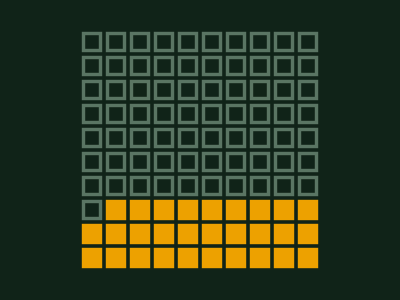
- The fundamental variable is the shielded share of supply, and it kept rising through the bad news. 4.92 million of 16.94 million ZEC (29.0%) sit in shielded pools. That share was ~8% in early 2024, ~18% in October 2025, ~30% by May 2026, dipped to ~26% when Ironwood forced a migration, and has recovered to 29% with 3.97 million ZEC already in the new pool.
- Ironwood was a controlled demolition, and the market forgave it in weeks. A May 2026 discovery of an under-constrained curve multiplication in the Orchard circuit (live since May 2022, with counterfeiting as the worst case) led to the pool being sealed with ~3.66 million ZEC inside and a new, formally verified pool opened at zero. ZEC fell about 38% on the disclosure and was above $1,000 within six weeks of activation. 88% of the sealed value had crossed the turnstile by 10 September, with no evidence of counterfeit supply so far.
- The ETF is a transparent-address product on a privacy asset. Grayscale's ZCSH launched 25 August with ~$304 million, a 2.50% fee and Coinbase Custody; its prospectus restricts custody to transparent addresses. On 8 September its own parent, DCG, subscribed ~$100 million in kind with 85,705 ZEC: the same dollar amount had been discussed as ~200,000 ZEC weeks earlier, a measure of how fast the price moved.
- Governance survived a walk-out and produced its most decisive vote ever. The whole ECC team resigned on 7 January over the Bootstrap board's refusal to spin out the Zashi wallet; ZEC fell 14% that day. Eight months later a shielded, encrypted coinholder poll drew 2.4 million ZEC (66% of eligible) and backed 25-second blocks (99.9%), kept the halving schedule (98.9%) and set a February 2031 start for re-issuing the lockbox (96.6%). Shielded Assets were rejected.
- The clock that matters is 10 July 2027. The EU's AMLR forbids crypto-asset service providers from handling anonymity-enhancing coins from that date. Binance already dropped ZEC in four EU markets in 2023 and 73 exchanges had delisted at least one privacy coin by late 2025. Zcash's transparent addresses and viewing keys are its compliance argument; whether regulators accept it is the single largest open question.
- Security is thin relative to valuation. Equihash hashrate is 26.65 GH/s and block rewards are worth ~$2.2 million a day; issuance is 3.25% a year (1,510 ZEC/day after the lockbox), not the ~2% often quoted. MVRV of 4.6 with a realised price of $321 means the average coin is sitting on a 360% gain.
Contents
- Update, 17 November 2026: NU7 is live and ZEC is about 37% below the September level
- 1. Background: what Zcash is and where it came from
- 2. The price record: two legs and a nine-month base
- 3. The shielded pool: the fundamental we actually track
- 4. Ironwood: a four-year-old flaw and a pool restarted from zero
- 5. The ETF: transparent custody for a private asset
- 6. Governance: a walk-out, then the most decisive vote in Zcash history
- 7. Risk analysis: what could end the rally
- 8. Discussion: what actually drove the move
- 9. Limitations and open questions
- Frequently asked questions
- Methodology and data sources
- References
- Revision history
- How to cite this report
Abstract. Between September 2025 and September 2026 Zcash (ZEC) went from roughly $50 to roughly $1,480, from the low eighties in market-capitalisation rank to the top ten, and from a 2018-era "privacy coin" footnote to the asset that accounts for more than half of the privacy-coin sector. This report reconstructs the year as a sequence of verifiable events rather than as a narrative: the closure of a two-year SEC investigation into the Zcash Foundation (14 January 2026); the resignation of the entire Electric Coin Company engineering team a week earlier; the discovery in May of a four-year-old soundness flaw in the Orchard zero-knowledge circuit and the emergency Ironwood upgrade of 28 July that sealed a $1.7 billion pool and restarted shielded value from zero; the conversion of Grayscale's Zcash Trust into the first US spot ZEC ETF (ZCSH, 25 August, ~$304 million); and a coinholder vote closing 14 September that backed 25-second blocks with 99.9% of the weight and set NU7's mainnet target at 5 November. Underneath those events sits one slow variable we treat as the fundamental: the share of ZEC held in shielded pools, which rose from ~8% in early 2024 to 29.0% (4.92 million ZEC, ~$7.3 billion) on 18 September 2026, supply that by construction rarely touches an exchange. We then set the bull case against what could end it: the EU's anti-money-laundering regulation, which bars regulated exchanges from listing anonymity-enhancing coins from 10 July 2027; an ETF whose prospectus permits only transparent addresses; a shielded pool whose supply can only be audited at its turnstiles; a proof-of-work budget of about $2 million a day securing a $25 billion asset; and a market-value-to-realised-value ratio of 4.6. All figures in sections 1 to 9 are frozen as of 18 September 2026; what changed by 17 November 2026 is in the update directly below.
Update, 17 November 2026: NU7 is live and ZEC is about 37% below the September level
This report was first published on 18 September 2026 and named five events that would trigger a revision. Two months on, here is what happened to each and what moved in the numbers. Sections 1 to 9 are left as published, apart from the few edits listed in the revision history; every new figure is in this section. All of them were read on 17 November 2026 between 10:44 and 11:05 UTC and will have moved since.
NU7 activated. The Zcash Foundation published the mainnet activation height, 3,543,405, with Zebra 7.0.0 on 22 October. Block 3,543,405 was mined on 6 November 2026 at 02:34:02 UTC, which is the evening of 5 November in US time zones and explains why some coverage gives that date. We measured the effect on Blockchair's block times: the 100 blocks before activation averaged 76.7 seconds apart, the first 100 after it 46.5 seconds while difficulty adjusted, and 100 blocks sampled on 14 November 25.2 seconds. The 25-second target from the September vote is what the chain now does.
Two side effects the vote table in section 6 only hinted at. Version 4 transactions stopped being valid at activation, and because Sprout transfers can only use version 4, funds left in the 2016 Sprout pool can no longer be spent (Zcash Foundation release notes). Blockhead, citing zecstats, reports that about 12,224 ZEC were still there at activation; we have not verified that figure. Separately, from NU7 on, 60% of each block's transaction fees are removed from circulation into a reserve and miners keep the other 40% (ZIP 235). The Foundation says re-issuance from that reserve starts at height 8,939,664 (ZIP 237); at 25-second blocks that height falls around 14 February 2031 by our arithmetic, the same month the coinholder vote chose for lockbox re-issuance. We have not read ZIP 237 closely enough to say the two are one mechanism.
The price did not hold. On CoinGecko's hourly series ZEC peaked near $1,681 on 26 September, eight days after we published. It was about $1,130 on 20 October, about $1,306 in the hour NU7 activated, and touched an hourly low near $830 on 14 November. At 10:00 UTC on 17 November it was about $934: 37% below the $1,479 this report opened with and 44% below the peak. The upgrade shipped on schedule and the price fell anyway.
The fundamental we track barely moved. zecstats showed 28.9% of supply shielded on 17 November (4.93 million ZEC), against 29.0% on 18 September. In dollars that is about $4.6 billion instead of $7.3 billion, because the price fell and not because coins left. The Ironwood pool holds 4.18 million ZEC, up from 3.97 million, and about 320,000 ZEC remain in the sealed Orchard pool, so roughly 91% of the 3.66 million sealed in July has crossed the turnstile. One caution: the same site's pool chart gave 4.98 million shielded ZEC for 15 November, and its weekly note says the pools shed about 59,000 ZEC in the week to 16 November. A small outflow has started; two months of data do not yet show a trend.
A conflict in the history that we have not resolved. The same dashboard now puts the shielded share at 29.3% a year ago, in November 2025. Version 1.0 said about 18% in October 2025 and about 30% by May 2026, figures we took from the coverage cited in section 3. We could not read the dashboard's daily series to reconcile the two. If the year-ago figure is right, the share has been roughly flat for twelve months, and the claim in finding 3 that it "kept rising" holds for 2024 to late 2025 but not for 2026. Read that finding with this caveat until we can check the series.
| Measure | 18 Sep 2026 (v1.0) | 17 Nov 2026 (v1.1) |
|---|---|---|
| ZEC price (CoinGecko, about 10:00 UTC) | $1,479 | $934 (37% lower) |
| Market capitalisation and rank (CoinGecko) | $25.05 B, rank 9 | $15.73 B, rank 11 |
| Shielded share of supply (zecstats) | 29.0% (4.92 M ZEC, ~$7.3 B) | 28.9% (4.93 M ZEC, ~$4.6 B) |
| Ironwood pool (zecstats) | 3.97 M ZEC | 4.18 M ZEC |
| MVRV (zecstats) | 4.6 | 2.34 on 15 Nov |
| Hashrate (zecstats) | 26.65 GH/s | 32.21 GH/s on 15 Nov |
| Target block spacing | 75 seconds | 25 seconds since block 3,543,405 |
| Circulating supply (CoinGecko) | 16.94 M ZEC | 17.05 M ZEC |
The five revision triggers, answered
- The 20 October NU7 go/no-go. The activation height was published with Zebra 7.0.0 on 22 October 2026. We did not find a primary record of a decision dated 20 October, so we state only the release.
- NU7 mainnet activation. Done: block 3,543,405, 6 November 2026, 02:34:02 UTC, verified on Blockchair.
- Any Orchard turnstile anomaly. A news search on 17 November found no report of a turnstile breach. We could not read the current state of the zecstats turnstile page with our tools, and we did not audit the turnstile ourselves.
- A second US ZEC ETF filing. None found in our search as of 17 November. This was a news search, not a check of SEC EDGAR.
- EU guidance on Zcash under AMLR. On 17 November the EU authority AMLA listed several drafts for consultation. We opened the draft guidelines on ongoing monitoring of a business relationship (Article 26(5) AMLR): it does not mention anonymity-enhancing coins. The other drafts we read by title only, and none is about them. We found no AMLA text on Zcash's transparent addresses or viewing keys. The 10 July 2027 date in section 7 stands.
Not re-checked in this version: the ETF. We did not compare ZCSH's assets with filings again. One trade report (Crypto Briefing) puts the week ending 23 October at $41.1 million of net inflows after a run of outflows; treat ETF flow figures you see elsewhere as unverified by us. Also reported and not verified by us: a draft proposal filed days after NU7 to cut the block target again, from 25 to 20 seconds (Blockhead).
1. Background: what Zcash is and where it came from
Zcash launched on 28 October 2016 as a Bitcoin-derived chain with one addition: transactions could be shielded, hiding sender, recipient and amount behind a zero-knowledge proof (a zk-SNARK) while remaining fully validated by every node. It kept Bitcoin's 21 million cap and halving schedule, but with a 75-second block interval and an ASIC-resistant-in-theory proof of work, Equihash, that Bitmain ASICs took over in 2018. The first-day price on CoinGecko, $3,192, remains its all-time high; almost every year since was spent between $20 and $300, which is the context for reading a $1,480 print as a nine-year high rather than a new one.
Three details from that history matter for 2026. First, the privacy is optional: Zcash has transparent addresses (t-addrs) that behave exactly like Bitcoin, and for most of its life most of the supply lived there. The "shielded share" is therefore a behavioural statistic, not a protocol constant, and it is the number we track most closely (§3). Second, the shielded pool has been rebuilt three times, Sprout (2016), Sapling (2018) and Orchard (May 2022, network upgrade NU5), each time because the cryptography improved or a flaw was found; Ironwood (2026) is the fourth pool, and §4 explains why it exists. Third, development was funded from block rewards through a "dev fund" to two organisations, the Electric Coin Company (ECC) and the Zcash Foundation, a structure that gave the SEC something to investigate and gave a nonprofit board (Bootstrap, which owns ECC) the power to lose its entire engineering team in a single day. Since November 2024 (NU6) 12% of each block subsidy goes into a protocol "lockbox" that is minted but not spendable; deciding when that lockbox re-enters circulation was one of the questions in this September's vote.
2. The price record: two legs and a nine-month base
CoinGecko's daily series, sampled every 30 days from 19 September 2025, gives the shape of the year. The first leg ran from $50 to a 18 November 2025 sample of $614, a 12× move in two months that coincided with the shielded share crossing 20% and with the first wave of "privacy trade" coverage. It gave back more than half: the December, January and February samples were $377, $410 and $297, and the March sample, $273, was the low of the base. From there the recovery was gradual ($341, $511, $519, $570 through July), interrupted by the Orchard disclosure and the Ironwood migration (August sample $493), and then vertical: $1,063 by 14 September, $1,336 on the 17th and $1,479 on the 18th, with a 24-hour range of $1,328–$1,527 and $2.36 billion of spot volume.
Two comparisons put the move in proportion. Against Bitcoin, one ZEC bought 0.01896 BTC on 18 September, up 140% over 30 days: this is not beta to the market, it is idiosyncratic. Against its own history, the price is still 54% below the October 2016 all-time high while the market capitalisation, at $25.05 billion on 16.94 million circulating ZEC, is the highest Zcash has ever had, because supply is roughly 17× larger than it was in the first weeks. Trade coverage also cites derivatives positioning ( $230 million of futures open interest and a cluster of short liquidations around $2,290) but open interest of under 1% of market cap is not the mechanism that moves a coin 29×; we treat it as a footnote.
3. The shielded pool: the fundamental we actually track
Every Zcash bull thesis, whatever else it says, reduces to one claim: that a growing share of the supply is being moved into shielded pools by holders who intend to keep it there, and that shielded supply is by construction illiquid: it does not sit on exchange order books, it cannot be seen by chain analysts, and moving it back out costs a proof and a fee. The zecstats.com full-node dashboard reads on 18 September: 4,918,435 ZEC shielded, 29.04% of 16,938,947 issued, worth about $7.27 billion at the day's price.
| Pool | Balance (ZEC) | Share of supply | Status |
|---|---|---|---|
| Transparent (t-addrs) | 11.96 M | 70.6% | Bitcoin-like; where exchanges and the ETF hold ZEC |
| Ironwood (2026) | 3.97 M | 23.4% | Current pool; formally verified circuit; accepts deposits |
| Orchard (2022) | 412,920 | 2.4% | Sealed 28 Jul 2026; withdrawals only, via a turnstile |
| Sapling (2018) | 512,236 | 3.0% | Legacy; still spendable |
| Sprout (2016) | 22,481 | 0.1% | Legacy; NU7 deprecates its transaction format |
The trend is the point. Reconstructed from the cited coverage and the dashboard: ~8% of supply shielded in early 2024; ~18% in October 2025; ~23% in November 2025; ~30% (about 5 million of 16.7 million ZEC) by May 2026, with 4.2 million of it in Orchard; 25.85% on 10 August, ten days after Ironwood forced every Orchard holder to decide whether to migrate; 29.0% today, with the new pool already holding 3.97 million. Put differently, the pool reset that could have emptied the shielded set instead filtered it: the holders who came back did so deliberately, with a fresh proof, into a pool that started at zero seven weeks ago.
Transaction-level data supports the same reading but the headline percentages need care. The dashboard counts 9,316 transactions a day (up 250% on the year), of which 4,429 (48%) touch a shielded pool; the "59% shielded" figure circulating in coverage measures a different denominator (shielded outputs, or the share excluding coinbase). Wallet and infrastructure changes explain the shift: the Zashi mobile wallet made shielded the default, Ledger shipped a Zcash Shielded app for Nano S Plus, Stax and Flex (rebased onto Ironwood after NU6.3), and even Coinbase now accepts deposits from shielded addresses, though it still will not send to them, which is the asymmetry every compliance team will recognise.
4. Ironwood: a four-year-old flaw and a pool restarted from zero
In late May 2026 Taylor Hornby, working on security analysis supported by Shielded Labs, found that one elliptic-curve scalar multiplication inside the Orchard zero-knowledge circuit was under-constrained: the proof did not fully pin down the operation it claimed to verify. The disclosure states that the flaw had existed since Orchard went live in May 2022 and that, in the worst case, a malicious prover could have produced an invalid shielded state transition, in plain terms, counterfeit ZEC inside the pool, invisible to the public chain. This is the nightmare scenario for any shielded system and the reason Zcash has always paired its pools with "turnstiles": value can only leave a pool through a transparent accounting step, so a pool whose withdrawals ever exceed its deposits has been exploited.
The response was fast and blunt. NU6.3, named Ironwood, activated on 28 July 2026 at block 3,428,143, roughly six weeks after the early-June statement that announced it. It closed Orchard to new deposits and internal transfers, leaving about 3.66 million ZEC (~$1.7 billion at the time) able to exit only through the turnstile, and opened a new pool built on a corrected, formally verified circuit that started with a balance of zero. The economic logic: if counterfeit value existed in Orchard it can never enter Ironwood unnoticed, because the turnstile will run dry before the counterfeit gets out. About $80 million of ZEC crossed on the first day; 87% of the sealed value had migrated by end-August and 88.2% by 10 September, leaving ~413,000 ZEC still in Orchard. So far the turnstile has shown nothing anomalous. That is not proof the flaw was never exploited (a counterfeiter who simply holds forever leaves no trace) but every ZEC that exits cleanly shrinks the space in which an exploit could hide.
Two lessons generalise. First, Zcash's pool architecture (segregated pools with turnstiles, and the willingness to abandon a pool) turned a catastrophic-class bug into a bounded, observable event. A single-pool privacy design would have had no equivalent move. Second, the market priced the disclosure as a 38% problem and the remedy as a solved one: ZEC recovered to ~$500 into activation and was above $1,000 six weeks later. Whether that confidence is warranted depends on the remaining 12% of Orchard value, and on the formal verification of the Ironwood circuit holding up to the same kind of scrutiny that found the last flaw.
5. The ETF: transparent custody for a private asset
Grayscale created a Zcash Trust in October 2017 and spent nine years unable to redeem it. The path to an ETF opened when the SEC's investigation (opened in August 2023, focused on the Zcash Foundation's funding and governance) closed in January 2026 without enforcement; the Foundation disclosed the outcome on 14 January and ZEC gained 10–14% on the day. Grayscale then worked through the S-3: Amendment 5 was filed 21 August, NYSE Arca certified the listing on 24 August, and on 25 August 2026 the trust converted into The Zcash ETF (ZCSH), the first and so far only US spot ZEC product. It launched with about $304 million in ZEC, a 2.50% annual sponsor fee, Coinbase Custody International as custodian, and in-kind creations and redemptions by authorised participants: the mechanism that lets arbitrage pin the share price to net asset value.
The detail that matters for this report is in the prospectus: only transparent (unshielded) addresses are used for custody. The ETF's ZEC is fully auditable on the public chain, which is what a US-listed fund requires and precisely what the asset is designed to avoid. The consequence is a structural split in the holder base: institutional demand via ZCSH accumulates in the transparent pool, retail and long-term holders accumulate in Ironwood, and the two never mix without a turnstile crossing. The ETF is therefore not "bringing ZEC into the shielded pool"; it is competing with the shielded pool for the same scarce float.
Flows so far are lumpy and partly internal. An 8-K filed 8 September discloses that DCG International Investments (Grayscale's parent) acquired about $100 million of ZCSH shares through an authorised participant by transferring 85,705.33 ZEC to the trust, on the same economic terms as any other share. The filing notes the figure had been discussed as roughly 200,000 ZEC for the same dollar amount when first contemplated; the difference is the price move between the two dates. Trade coverage put the fund above $500 million by 10 September; we could not confirm that number from a filing and treat it as reported, not verified.
6. Governance: a walk-out, then the most decisive vote in Zcash history
On 7 January 2026 the entire engineering team of the Electric Coin Company resigned. CEO Josh Swihart described it as a constructive discharge by the board of Bootstrap, the 501(c)(3) that owns ECC, after the board blocked ECC's plan to spin the Zashi wallet out into a private company that could raise outside capital; the board cited legal risk to the nonprofit. Swihart named four board members as "misaligned with Zcash's original mission" and announced the team would form a new company. ZEC fell nearly 14% in 24 hours. Protocol development did not stop (the Zcash Foundation, Shielded Labs, Valar Group, Zodl and Sean Bowe's Project Tachyon all shipped through the year, and Ironwood was delivered in six weeks by that coalition) but the episode is the clearest evidence in this report that Zcash's institutions are more fragile than its cryptography.
The NU7 coinholder vote, run from 25 August to 14 September, was in part a response. It was the first Zcash poll weighted by shielded balances: eligibility was spendable ZEC in the Ironwood pool at block 3,459,350 (24 August), ballots were encrypted and split into 16 unlinkable pieces, and a five-organisation coordinator multisig (Project Tachyon, Valar Group, Zcash Foundation, Zodl, Shielded Labs) with at least ten validators holding key shares was required to decrypt results. The legitimacy threshold was 1 million ZEC; 2.4 million voted, about 66% of the 3.6 million eligible. (The eligible pool is smaller than the total shielded figure because the snapshot came four weeks into the Orchard migration.)
| Question | Result | What it means |
|---|---|---|
| Block time 75 s → 25 s (ZIP 218) | 99.9% in favour | Subsidy per block divided by three so issuance per wall-clock unit is unchanged; Orchard throughput ~2.9 → ~6.6 tx/s; first confirmation three times sooner |
| Keep halvings vs. smooth issuance curve | 98.9% keep halvings | Zcash stays on a Bitcoin-style schedule; the NSM's smoothing option is dropped |
| Lockbox re-issuance start date | 96.6% for February 2031 | The 12% of subsidy accumulating since NU6 begins re-entering circulation from that date |
| Sprout deprecation (disable v4 transactions) | Approved | The 2016 pool's format is retired |
| Zcash Shielded Assets (ZSA), memo bundles | Out of scope / rejected | No wallet-breaking format changes in NU7 |
On 17 September the engineering teams published the schedule: code complete by 30 September, testnet activation 6 October, a go/no-go decision and mainnet activation height on 20 October, mainnet target 5 November 2026. NU7 is a consensus change on a live $25 billion network that has just changed pools; the 20 October decision is the next hard date for this report. Outcome (v1.1): the height shipped with Zebra 7.0.0 on 22 October and NU7 activated on 6 November at 02:34:02 UTC; see the update at the top.
Beyond NU7 sits Tachyon, the scaling architecture led by cryptographer Sean Bowe: wallets that carry recursive proofs of their own state, nodes that prune history instead of accumulating it, and oblivious synchronisation that moves payment secrets off-chain. Its first release candidate hit testnet on 22 May 2026 with the 25-second blocks now heading to mainnet. A related proposal, ZIP 2005, derives note randomness from a BLAKE2b hash of the note's fields so that commitments become quantum-binding: an adversary who breaks the curve still cannot forge a note without the hash preimage. Crosslink, the hybrid proof-of-stake proposal, has no client implementation consensus and is not on the near-term path.
7. Risk analysis: what could end the rally
A report that only listed catalysts would be marketing. The following are the risks we consider material, with the mechanism and the observable that would tell you it is materialising.
| Risk | Mechanism | What to watch |
|---|---|---|
| EU AMLR, 10 July 2027 | Regulated crypto-asset service providers in the EU may not handle anonymity-enhancing coins from that date. Binance removed ZEC for users in France, Italy, Poland and Spain in 2023; 73 exchanges had delisted at least one privacy coin by late 2025. | Whether ESMA/EBA guidance treats Zcash's transparent addresses and viewing keys as sufficient; Kraken/Coinbase EU listing decisions in H1 2027 |
| ETF concentration and reflexivity | ZCSH is the only US product, holds transparent ZEC only, charges 2.50%, and its largest disclosed subscriber is its own parent. In-kind redemptions in a drawdown put transparent ZEC straight onto the market. | 8-K/N-CSR filings; daily AUM vs. price; any competing S-1 |
| Residual Orchard risk | ~413,000 ZEC remain in the sealed pool. If the circuit flaw was exploited, the turnstile is where it shows; if the Ironwood circuit has an equivalent flaw, the pool restarts again. | Orchard turnstile balance vs. withdrawals; any Shielded Labs / Hornby disclosure |
| Thin proof-of-work | 26.65 GH/s of Equihash secures $25 B; daily block rewards are ~1,510 ZEC (~$2.2 M) and fees are 0.2% of that. A 25-second block time after NU7 raises orphan rates and shortens the confirmation-to-security curve. | Hashrate after NU7; pool concentration; any exchange raising confirmation requirements |
| Valuation and holder profit | MVRV 4.6 with a $321 realised price: the average coin is up ~360%. Issuance is 3.25%/yr, above the 2% often quoted, because the 2024 halving is measured against a smaller base. | Realised price; exchange inflows from t-addrs; 30-day ZEC/BTC |
| Institutional fragility | The ECC exodus shows a single board can strand the flagship wallet's team. Ironwood and NU7 depend on a coalition of small organisations with dev-fund exposure. | Dev-fund renewal debates; whether the ex-ECC company ships; Zashi's ownership |
The regulatory point deserves one more paragraph because it is the one that a price chart cannot see. The EU's regime is a ban on venues, not on the asset: it removes ZEC from regulated European order books, which is exactly where transparent ZEC gets liquidity. Zcash's defence (that a user can prove their history with a viewing key, and that a t-addr is as auditable as Bitcoin) is technically sound and legally untested. If it is accepted, Zcash is the only major privacy coin with a compliant mode and the ban becomes a moat. If it is not, the 2027 date is a forced seller on a calendar, and the shielded pool's illiquidity cuts both ways: the coins that cannot be sold in a panic are also the coins that cannot be bought in a squeeze.
8. Discussion: what actually drove the move
Ordering the year's events against the price series (§2) suggests the following causal reading. The first leg (October–November 2025) was a re-rating from a very low base as the shielded share crossed 20% and the "privacy is the next narrative" trade found a liquid, exchange-listed asset to express itself in; it overshot and retraced 55%. The base (December–July) absorbed three pieces of bad news (the ECC walk-out, the Orchard flaw, and the Ironwood drawdown) without breaking $270, and that resilience is itself the strongest signal in the data: the holders who mattered did not sell into the worst disclosure the protocol has ever made. The second leg (late August–September) is the easiest to date: it starts with the ETF conversion on 25 August, accelerates through the vote, and goes vertical in the week the NU7 schedule was published. Its mechanism is a demand shock (ETF, in-kind subscriptions, derivatives) meeting a float that a year of shielding had thinned.
What the reading does not support is the claim that privacy demand alone did this. Monero, the other large privacy coin, does not have a US ETF, a transparent mode, or an SEC letter, and the sector figure ( $33.6 billion, of which Zcash is over 60%) says the capital went to the coin that could be bought by institutions, not to privacy in general. That is the paradox at the centre of this report: the 2026 Zcash rally was led by a transparent-address ETF into an asset whose thesis is that its supply is disappearing into shielded pools. Both halves are true, and they are pulling on the same 16.9 million coins from opposite ends.
9. Limitations and open questions
- Snapshots. Every market figure here is an 18 September 2026 read. We publish the sample dates so a reader can re-derive the ratios; we will not update prose numbers silently (see revision history).
- Shielded-share disagreement. zecstats says 29.0%; CoinGecko-derived coverage says 30%+; the 10 August dashboard said 25.85%. The differences are timing and whether Orchard value in transit is counted. We use the full-node figure. Added in v1.1: the dashboard now gives 29.3% for a year ago, against the ~18% for October 2025 that we took from coverage. Unreconciled; see the update.
- ETF assets. $304 million at launch and ~$100 million from DCG are from filings and Grayscale; the "$500 million" figure is from trade coverage and unverified.
- Was Orchard exploited? Unknown, and only partially knowable. The turnstile audit is the observable; it will never prove a negative.
- Will NU7 ship on 5 November? Resolved in v1.1: it activated at block 3,543,405 on 6 November 2026 at 02:34:02 UTC, the evening of 5 November in US time zones.
- Who is ECC now? The ex-ECC team's new company and the status of Zashi's ownership were not resolved in sources available to us.
- We hold no ZEC and have no relationship with any organisation named here.
Frequently asked questions
Why is Zcash (ZEC) going up in 2026?
Three things stacked: the SEC closed its two-year probe of the Zcash Foundation in January 2026 with no action; Grayscale converted its Zcash Trust into the first US spot ZEC ETF (ZCSH) on 25 August 2026 with about $304 million; and the share of ZEC held in shielded pools rose from ~8% in 2024 to 29% in September 2026, thinning the tradable float. A near-unanimous NU7 governance vote and a published mainnet date (5 November) added a second leg in September. Since then the price has fallen: after an hourly high near $1,681 on 26 September 2026 it was about $934 on 17 November 2026.
What is the Zcash shielded pool and why does it matter for the price?
Shielded ZEC is held in addresses whose balances and transfers are hidden by zero-knowledge proofs. As of 18 September 2026, 4.92 million of 16.94 million ZEC (29.0%) are shielded, worth about $7.3 billion. That supply does not sit on exchanges and cannot be tracked by chain analysts, so a rising shielded share means a shrinking liquid float. On 17 November 2026 the same dashboard showed 28.9% (4.93 million ZEC, about $4.6 billion at the lower price).
What was the Zcash Ironwood upgrade?
Ironwood (NU6.3) activated on 28 July 2026 after a soundness flaw was found in the Orchard zero-knowledge circuit, present since May 2022. It sealed the Orchard pool (~3.66 million ZEC) to new deposits and opened a new, formally verified pool starting from zero. By 10 September, 88% of the sealed value had migrated through the turnstile with no sign of counterfeit supply.
Is there a Zcash ETF?
Yes. The Zcash ETF (ticker ZCSH) began trading on NYSE Arca on 25 August 2026 after Grayscale converted its 2017 trust. It launched with ~$304 million in ZEC, charges a 2.50% fee, uses Coinbase Custody, and by prospectus holds only transparent (unshielded) ZEC.
What is Zcash NU7 and when did it activate?
NU7 is the network upgrade that cut Zcash's target block time from 75 to 25 seconds (ZIP 218). A coinholder vote closing 14 September 2026 backed it with 99.9% of the weight, kept the halving schedule (98.9%), and set February 2031 for lockbox re-issuance. It activated on mainnet at block 3,543,405, mined on 6 November 2026 at 02:34:02 UTC (the evening of 5 November in US time zones). Version 4 transactions are no longer valid, so funds left in the old Sprout pool cannot be spent.
Does the 25-second block time change Zcash's supply?
No. ZIP 218 divides the per-block subsidy by three so that issuance per unit of time is unchanged. The 21 million cap and the halving schedule stay as they are.
Will Zcash be banned in Europe?
The EU's anti-money-laundering regulation (AMLR) stops regulated crypto exchanges from handling anonymity-enhancing coins from 10 July 2027. Zcash argues its transparent addresses and viewing keys make it compliant; regulators have not ruled on that. Binance already delisted ZEC in four EU countries in 2023.
How does Zcash differ from Monero?
Monero is private by default with no transparent mode. Zcash makes privacy optional: it has Bitcoin-like transparent addresses, shielded addresses, and viewing keys that let a holder disclose history. That optionality is why Zcash could get a US ETF and why regulators may treat it differently.
What is Zcash's max supply and inflation?
21 million ZEC, like Bitcoin. 16.94 million (80.7%) had been issued by September 2026. Circulating issuance is about 1,510 ZEC a day after the 12% lockbox, roughly 3.25% a year, falling at each halving.
Methodology and data sources
Compiled 18 September 2026. Market data (price, 24-hour range, volume, market capitalisation, rank, circulating supply, one-year and 30-day changes, the 30-day price samples) from the CoinGecko public API, read at about 10:00 UTC. Pool balances, shielding rate, daily transactions, issuance, MVRV and hashrate from the zecstats.com dashboard, which computes from a full node the site operators run; chain height cross-checked against Blockchair (3,487,563). ETF facts from the Grayscale product page, the SEC S-3 amendments and the 8-K of 8 September 2026. NU7 vote design from the Zcash Community Forum announcement; results and schedule from the cited coverage of 14–18 September, cross-checked across at least two outlets. Ironwood and Orchard facts from CoinDesk, The Block and the trade coverage that quoted the disclosure. Where a number appears in only one source (the $500 million ETF figure, the $33.6 billion sector figure, the derivatives data) we say so in the text. Statements about the future are analysis and are worded as such.
Version 1.1, 17 November 2026. The NU7 activation height and its consequences for version 4 transactions and fees are from the Zebra 7.0.0 release notes and the Zcash Foundation's release post. The activation block's timestamp and the three block-spacing averages are our own reads of the Blockchair API (100 consecutive blocks each). Prices are from CoinGecko's hourly series; market capitalisation, rank and supply from its markets endpoint at 10:44 UTC. Shielded share, pool balances, MVRV and hashrate are from zecstats.com. All reads were made on 17 November 2026 between 10:44 and 11:05 UTC. The Sprout balance, the ETF week and the 20-second proposal are from single trade reports and are labelled as such in the text. AMLA's consultation list and its draft on ongoing monitoring were read on its website the same day. Sections 1 to 9 were not re-audited.
References
- Zcash Foundation. Zebra 7.0.0 release notes (NU7 Mainnet activation height 3,543,405), 22 Oct 2026 — https://github.com/ZcashFoundation/zebra/releases/tag/v7.0.0
- Zcash Foundation. Zebra 7.0.0 Release (25-second blocks, version 4 transactions, fee reserve) — https://zfnd.org/zebra-7-0-0-release/
- Blockchair. Zcash block 3,543,405 (mined 6 Nov 2026, 02:34:02 UTC) — https://blockchair.com/zcash/block/3543405
- Blockhead. Zcash's NU7 goes live and strands 12,224 ZEC in Sprout pool (13 Nov 2026) — https://www.blockhead.co/2026/11/13/zcashs-nu7-goes-live-and-strands-12-224-zec-in-the-sprout-pool-as-zec-rises-against-the-market/
- Crypto Briefing. Grayscale's Zcash ETF pulls in $41.1 million (week ending 23 Oct 2026) — https://cryptobriefing.com/grayscale-zcash-etf-41-million-inflows/
- AMLA. Public consultations (read 17 Nov 2026) — https://www.amla.europa.eu/policy/public-consultations_en
- CoinGecko. Zcash (ZEC) market data and price history — https://www.coingecko.com/en/coins/zcash
- zecstats.com. Live ZEC network dashboard (pool balances, shielding rate, hashrate) — https://zecstats.com/
- Grayscale. The Zcash ETF (ZCSH) product page — https://etfs.grayscale.com/zcsh
- SEC EDGAR. The Zcash ETF, Form 8-K of 8 September 2026 (DCG in-kind subscription) — https://www.sec.gov/Archives/edgar/data/0001720265/000119312526385317/zcsh-20260908.htm
- The Block. Grayscale moves closer to launching first Zcash ETF with amended SEC filing (21 Aug 2026) — https://www.theblock.co/news/regulation/2026-08-21-grayscale-moves-closer-launching-first-zcash-etf-in-us-sec-amended-filing-412517
- crypto.news. Grayscale launched the first Zcash spot ETF on NYSE Arca — https://crypto.news/grayscale-zcash-spot-etf-privacy-coins-back/
- crypto.news. U.S. SEC closes Zcash Foundation probe with no enforcement action — https://crypto.news/sec-ends-zcash-foundation-probe-enforcement-2026/
- CoinDesk. Zcash developer team behind ECC quits after governance clash with Bootstrap board (8 Jan 2026) — https://www.coindesk.com/tech/2026/01/08/zcash-developer-team-behind-ecc-quits-after-governance-clash-with-bootstrap-board
- The Block. Zcash developers quit, form new company after board clash — https://www.theblock.co/post/384737/zcash-developers-form-new-company
- CoinDesk. Zcash seals $1.7 billion shielded pool as Ironwood upgrade activates (28 Jul 2026) — https://www.coindesk.com/tech/2026/07/28/zcash-seals-usd1-7-billion-shielded-pool-as-ironwood-upgrade-activates
- CoinDesk. About $80 million ZEC crosses into Zcash's Ironwood pool in the first day — https://www.coindesk.com/tech/2026/07/29/about-usd80-million-zec-crosses-into-zcash-s-new-ironwood-pool-in-the-first-day
- The Block. Zcash activates Ironwood upgrade, launching new shielded pool after Orchard vulnerability — https://www.theblock.co/post/409934/zcash-ironwood-upgrade-launching-new-shielded-pool-after-orchard-vulnerability
- Crowdfund Insider. Zcash launches Ironwood upgrade following Orchard security vulnerability — https://www.crowdfundinsider.com/2026/07/294291-privacy-focused-zcash-zec-launches-ironwood-upgrade-following-orchard-security-vulnerability/
- crypto.news. Why 30% of Zcash supply is now in the shielded pool (May 2026) — https://crypto.news/why-30-of-zcash-supply-is-now-in-the-shielded-pool/
- Zcash Community Forum. NU7 Coinholder Vote (design, eligibility, coordinator multisig) — https://forum.zcashcommunity.com/t/nu7-coinholder-vote/56912
- Cointelegraph via TradingView. Zcash holders back 25-second blocks, vote to keep ZEC halving schedule — https://www.tradingview.com/news/cointelegraph:5e28980a2094b:0-zcash-holders-back-25-second-blocks-vote-to-keep-zec-halving-schedule/
- Cointelegraph. Zcash NU7 upgrade targets Nov. 5 activation — https://cointelegraph.com/news/zcash-nu7-november-mainnet-activation
- FXStreet. Zcash targets November for NU7 mainnet upgrade with 25-second blocks (18 Sep 2026) — https://www.fxstreet.com/cryptocurrencies/news/zcash-targets-november-for-nu7-mainnet-upgrade-with-25-second-blocks-202609180526
- CoinDesk Research. Building the Zcash Machine: Tachyon and Quantum Readiness — https://www.coindesk.com/research/building-the-zcash-machine-tachyon-and-quantum-readiness
- KuCoin. Zcash Q3 2026: Ironwood migration, ZEC's $1,000 rally and what comes next — https://www.kucoin.com/blog/zcash-q3-2026-ironwood-migration-zec-1000-rally
- KuCoin. Zcash surges 2,496% in 2026, is the rally ending? (sector share, derivatives data) — https://www.kucoin.com/news/flash/zcash-surges-2-496-in-2026-is-the-rally-ending
- CoinMarketCap Academy. Binance delists privacy-focused cryptocurrencies in multiple European countries — https://coinmarketcap.com/academy/article/binance-delists-privacy-focused-cryptocurrencies-in-multiple-european-countries
- Coinlaw. Privacy coins and regulatory compliance: where Monero and Zcash stand now (delisting counts) — https://coinlaw.io/privacy-coins-vs-regulatory-compliance-statistics/
- Ledger Support. Zcash Shielded app (Nano S Plus, Stax, Flex) — https://support.ledger.com/
Revision history
Added the 17 November 2026 update: NU7 activation (block 3,543,405, 6 November, 02:34:02 UTC) verified on-chain and block spacing measured; price, shielded pool, MVRV and hashrate re-read; each of the five revision triggers answered. TL;DR, description and three FAQ answers re-dated; one key finding added. Edits to the 18 September text outside the update: the 'frozen' sentence in the abstract; 'today's level' reworded as 'the 18 September level' in finding 2; an outcome sentence added to section 6; in section 9 the NU7 bullet replaced and a note added to the shielded-share bullet. Disclosed, not resolved: the dashboard's year-ago shielded share (29.3%) conflicts with the ~18% for October 2025 in finding 3. Not re-checked: ETF assets against filings. Next triggers: a sustained fall in the shielded share, the 20-second block proposal reaching a vote, a second US ZEC ETF filing, AMLA guidance on anonymity-enhancing coins, any recovery path for Sprout funds.
First publication. All market and pool figures as of 18 September 2026. Revision triggers: the 20 October NU7 go/no-go, NU7 mainnet activation, any Orchard turnstile anomaly, a second US ZEC ETF filing, or EU guidance on Zcash under AMLR.
How to cite this report
Santala Research. “Zcash (ZEC) in 2026: Inside the Privacy-Coin Rally, the Shielded Pool and NU7”. Version 1.1, 17 November 2026. https://santala-research.com/research/zcash-zec-privacy-rally-2026.html
Read next
Binance Hack Explained: How $6.3B Was Stolen via EIP-7702
Binance lost ~$6.3B on 29 Oct 2026. By 17 Nov: 18,270 BTC unmoved, all 233M XRP moved, the FBI names North Korea, and Binance says losses are covered.
17 November 2026Blog · FundamentalsBeginnerWhat Is a Blockchain? A Beginner's Guide
A record book that thousands of computers keep in step and none of them can quietly edit. What is inside a block, why a hash makes tampering visible, who checks the rules, and what a blockchain is bad at.
April 2, 2026Blog · DeFiBeginnerDeFi Explained: Decentralized Finance in Plain Language
Trading, lending and borrowing through programs on a blockchain instead of through a company. The three building blocks, where the yield actually comes from, and the ways people lose money, in the order they happen most.
April 2, 2026